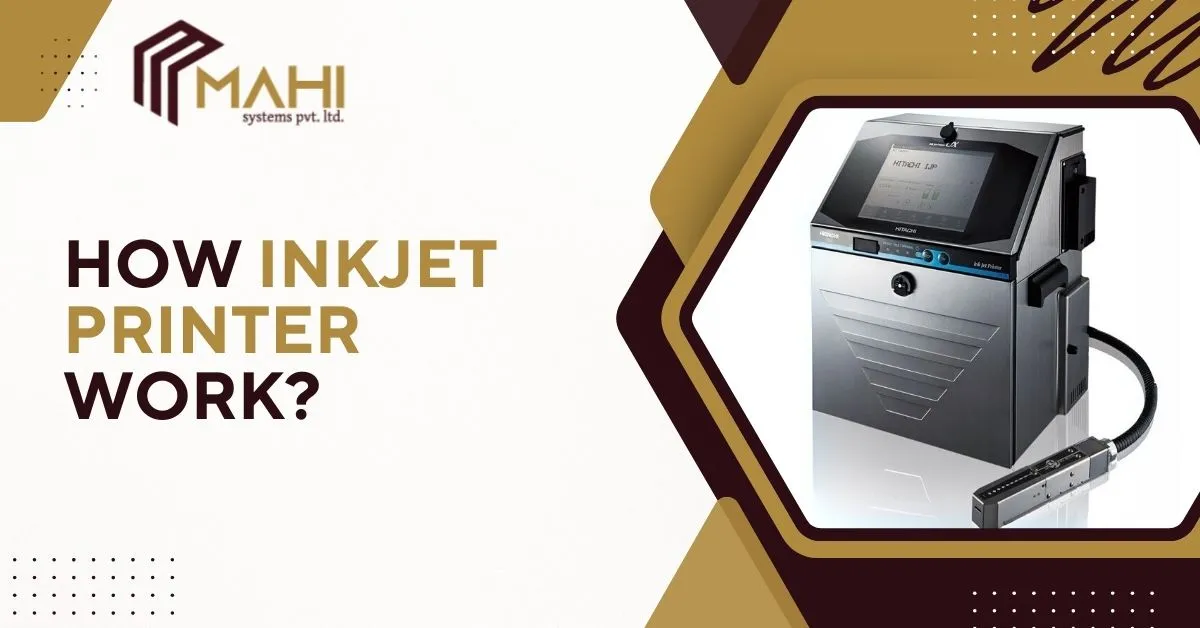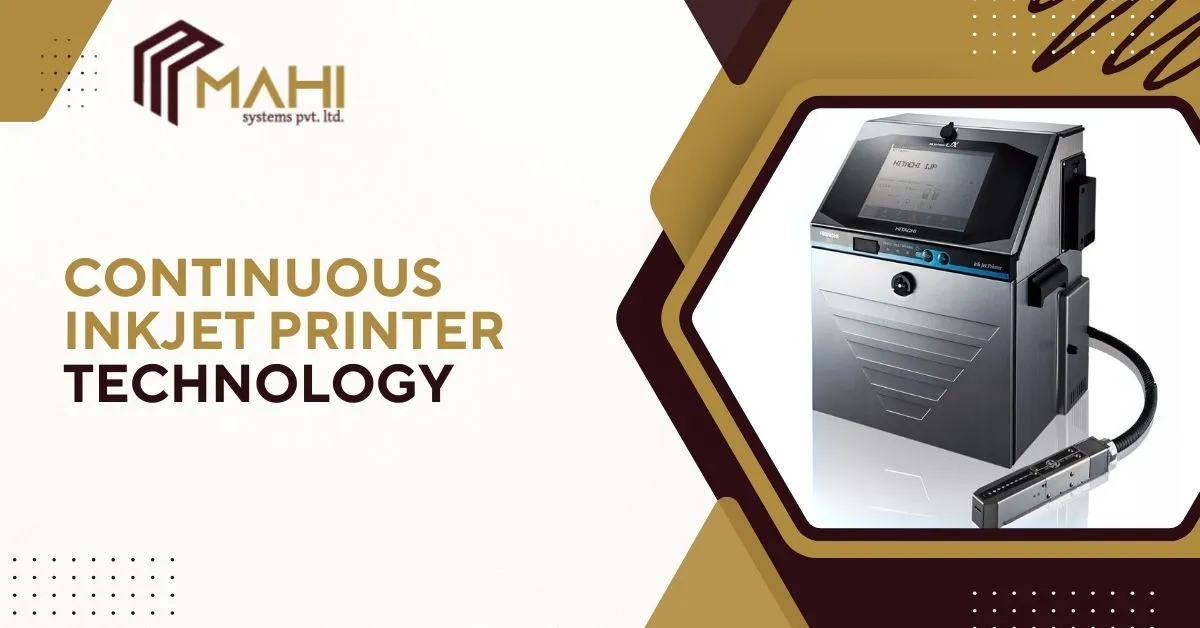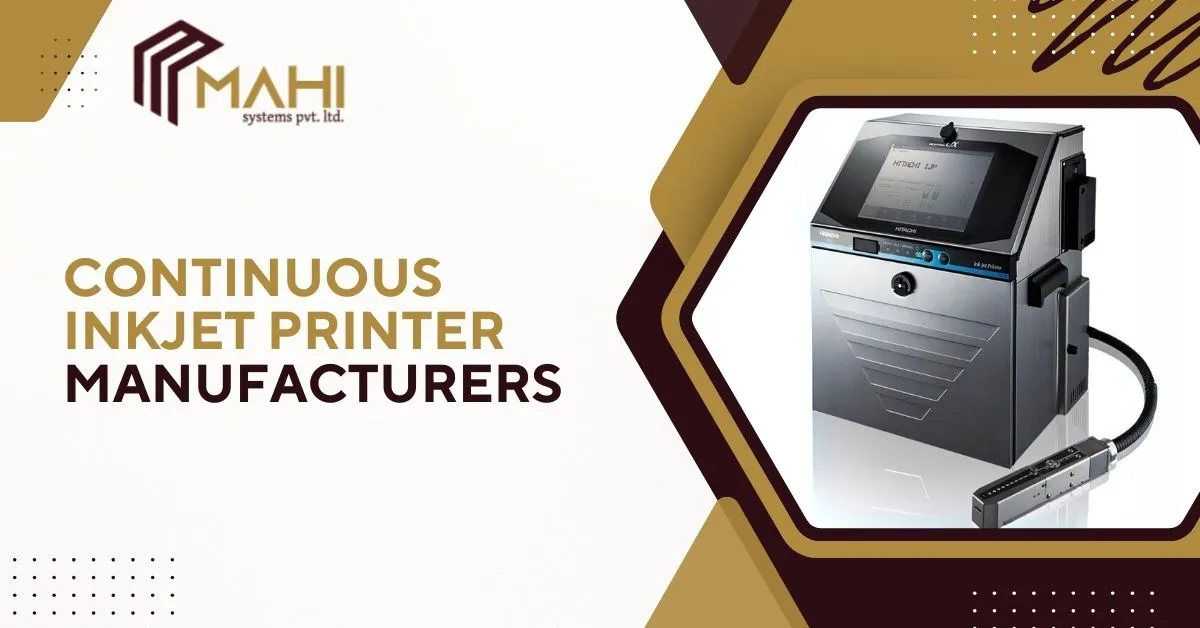
Inkjet printing is one of the most widely used printing technologies in both offices and…
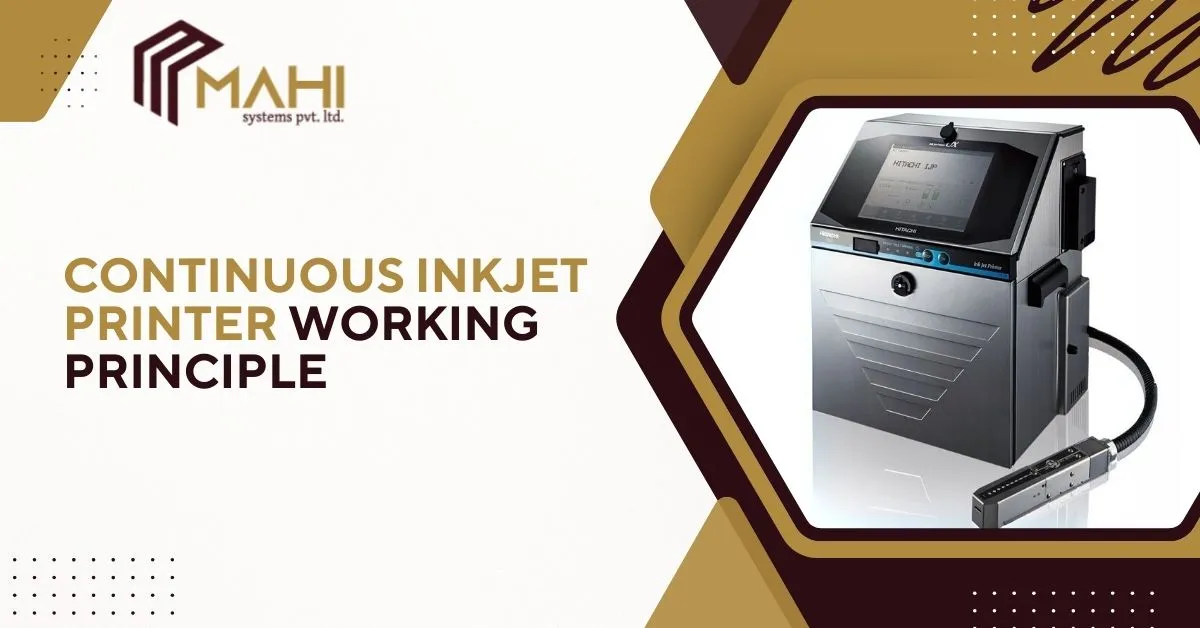
Industrial coding and marking are essential for traceability, compliance, and brand protection in modern manufacturing. Whether you need batch numbers, expiry dates, or QR codes on products, the printing system must be fast, reliable, and consistent. In high-speed packaging environments, the Continuous Inkjet Printer is one of the most preferred technologies because it delivers non-contact printing on almost any surface with minimal downtime.
What Is Continuous Inkjet Printer?
A Continuous Inkjet Printer is a high-speed industrial coding machine used to print variable data such as dates, batch codes, serial numbers, and barcodes on products without direct contact.
In contrast to simple home inkjet printers, CIJ printers are built for industrial environments where production never stops. The Continuous Inkjet Printer can print:
- Expiry dates and manufacturing dates
- Batch numbers and lot codes
- Serial numbers and UID data
- Logos, symbols, and brand marks
- Barcodes, QR codes, and DataMatrix codes
This makes CIJ printers highly useful for industries like food and beverage, pharma packaging, FMCG manufacturing, chemical plants, automotive production, and electronics industries where traceability is mandatory.
Working Principle Explained
The Continuous Inkjet Printer working principle is based on generating a continuous ink stream, converting it into droplets, and controlling those droplets using electrical charges.
Unlike other methods, CIJ does not print in a stop-and-go pattern. Instead, it prints continuously, which is why it works perfectly for high-speed conveyor systems. In the center of CIJ technology, the Continuous Inkjet Printer ensures:
- High-speed printing without delay
- Stable print quality on moving surfaces
- Non-contact marking on uneven products
- Continuous ink usage with minimum wastage
Step-by-Step CIJ Printing Process
A Continuous Inkjet Printer follows a precise step-by-step process to ensure accurate, high-speed coding even on moving products.
Ink is pumped from the reservoir
Ink is pressurized and supplied to the print head through the ink system.
Ink stream exits the nozzle
The nozzle creates a fine, continuous jet of ink that flows at high speed.
Droplet generator breaks the ink stream
Vibrations or piezoelectric energy break the continuous stream into uniform droplets.
Droplets receive electrical charge
The printer selectively charges droplets based on the characters or code to be printed.
Deflection plates direct the droplets
Charged droplets are pulled toward the product to form text and codes.
Ink droplets form the printed message
The droplets hit the surface and create clear marks such as batch codes or expiry dates.
Unused droplets return through the gutter
Ink not used in printing is collected and recirculated back into the system.
Because this entire process happens within milliseconds, the Continuous Inkjet Printer can print clearly on high-speed conveyors without slowing production.
Key Components in CIJ Printing System
A Continuous Inkjet Printer includes advanced components that work together to deliver stable print quality, high uptime, and continuous performance.
Print head & nozzle
The print head is the core printing unit that produces a fine, continuous ink jet stream at high speed. The nozzle controls ink flow precisely, forms uniform droplets, and ensures stable printing even on moving products, curved surfaces, and fast conveyor lines.
Ink tank & recirculation unit
This system stores the ink and continuously circulates it through the printer to maintain smooth ink flow, stable performance, and correct viscosity. The recirculation process prevents ink settling, supports continuous operation, and helps deliver consistent print quality during long production shifts.
Charging electrode
This component applies an electrical charge to selected ink droplets according to the required code or message. It plays an essential role in controlling which droplets will be used for printing and which droplets will be recycled, ensuring clean, accurate, and error-free code formation.
Deflection plates
Deflection plates generate electrostatic force that guides charged droplets toward the product surface. They ensure accurate placement of every character, enabling sharp printing of dates, batch codes, logos, barcodes, QR codes, and variable production data with high precision.
Gutter system
The gutter collects unused or non-printed droplets and returns them back into the ink circulation system. This process reduces ink wastage, supports continuous printing, maintains stable operation, and makes CIJ technology highly efficient for high-speed industrial environments.
Filters & pumps
Pumps maintain steady pressure and flow so ink moves smoothly through the system. Filters remove dust particles, ink impurities, and contaminants that may block the nozzle. Together, filters and pumps improve print stability, protect internal components, and increase overall printer life.
Controller & software
The controller and software unit manages printing functions such as message setup, fonts, character size, code positioning, barcodes, QR codes, serial numbering, and variable data printing. It also supports connectivity with sensors, conveyors, and PLC systems for fully automated coding on production lines.
Makeup / solvent system
The makeup or solvent system controls ink viscosity by adding solvent automatically when required. This prevents ink from becoming thick due to evaporation, improves fast drying performance on packaging surfaces, and ensures smooth, consistent printing output in continuous production environments.
Components and Function
| CIJ Component | Function |
| Nozzle | Creates continuous ink stream |
| Droplet Generator | Breaks ink stream into droplets |
| Charging Electrode | Charges droplets for coding |
| Deflection Plates | Directs ink droplets onto product |
| Gutter System | Collects unused droplets |
| Ink Recirculation Unit | Maintains ink flow & viscosity |
| Filters | Prevent clogging and ensure consistency |
| Controller & Software | Controls messages, fonts, variable codes |
| Makeup/solvent unit | Maintains drying speed and viscosity |
Types of CIJ Inks Used
A Continuous Inkjet Printer uses different ink types depending on the substrate, application environment, and code durability requirements.
- Dye-based inks – standard inks for general packaging coding
- Pigmented inks – high-contrast inks for dark surfaces
- Fast drying inks – used for plastics and non-porous materials
- Washable inks – ideal for returnable bottles and beverage industries
- Food-grade and pharma inks – designed for compliance and safety
- Solvent-resistant inks – used in chemicals, oils, and industrial environments
Selecting the correct ink ensures the Continuous Inkjet Printer delivers clear printing with strong adhesion and long-lasting code readability.
Benefits of CIJ Working Principle
The Continuous Inkjet Printer working principle offers major advantages for industries that require fast and reliable coding without production delays.
Non-contact printing, ideal for fragile items
In industrial coding, non-contact printing is a major advantage because it prevents damage to sensitive products. Fragile packaging, soft plastic containers, and delicate items require printing without physical pressure or friction. In the center of this benefit, a CIJ Printer ensures smooth printing without touching the product surface, reducing rejection rates and maintaining product appearance.
High-speed coding for fast conveyor systems
Many manufacturing units run high-speed conveyors where products move continuously without stopping. In such environments, printers must deliver sharp codes instantly without slowing the line speed. At the center of high-speed performance, a Continuous Inkjet Printer can print thousands of characters per second, ensuring batch codes and expiry dates remain readable even at maximum production speed.
Works on curved, uneven, and difficult surfaces
Not all packaging surfaces are flat, and many industries print on bottles, caps, pipes, wires, and irregular containers. Traditional contact printers struggle on curved or uneven substrates, leading to smudging or unreadable codes. In the center of surface flexibility, a CIJ Printer prints clearly on complex shapes, helping industries achieve consistent product marking on any surface type.
Supports variable data printing in real time
Modern industries require printing that changes frequently, including serial numbers, batch codes, UID, QR codes, and barcodes. Real-time variable data printing supports traceability, anti-counterfeiting, and compliance requirements. In the center of this real-time coding capability, a Continuous Inkjet Printer allows instant code changes without stopping the machine, making it perfect for automated packaging lines.
Ink recirculation reduces wastage and downtime
Ink wastage increases operational costs and can also create downtime if the ink system becomes unstable. CIJ technology solves this by recycling unused ink droplets back into the system through the gutter and recirculation unit. In the center of efficient operation, a CIJ Printer reduces ink wastage, maintains stable viscosity, and supports continuous printing with minimal production interruptions.
Suitable for 24/7 operations in industrial environments
Many factories operate in multiple shifts or even 24 hours daily, meaning coding machines must handle continuous workloads. Industrial printing environments may include dust, humidity, heat, and vibration, which require strong machine durability. In the center of continuous performance, a Continuous Inkjet Printer is built for long-running operations with stable output, high reliability, and minimal maintenance needs.
Easy integration with production lines and automation systems
Automation is becoming a key requirement in modern industries for faster production and reduced human error. CIJ printers can connect with conveyors, sensors, encoders, PLC systems, and factory automation software for synchronized coding. In the center of automation compatibility, a CIJ Printer integrates easily into production lines and supports smooth, error-free printing in real-time operations.
Reduce downtime and improve printing quality on your packaging line.
Contact us today for CIJ printer service and solutions.
Applications in Industry
A Continuous Inkjet Printer is used in multiple industries where traceability and compliance are important.
Common applications:
- Printing expiry dates and manufacturing dates
- Batch coding and lot number marking
- Product serialization and UID coding
- Barcode and QR code printing for tracking
- Coding on bottles, cans, cartons, pipes, labels, and pouches
- Printing on plastic films and flexible packaging
From pharma packaging to beverage bottling lines, the Continuous Inkjet Printer ensures codes remain readable, sharp, and production-ready.
Common Problems and Solutions
A Continuous Inkjet Printer may face minor issues in harsh industrial environments, but regular monitoring and maintenance prevent major downtime.
Common CIJ issues:
- Clogged nozzle due to ink drying or dust exposure
- Faded prints caused by low ink viscosity or poor settings
- Ink splashing from incorrect distance or pressure
- Makeup fluid imbalance leading to viscosity instability
- Sensor alignment problems affecting printing accuracy
Quick solutions:
- Run auto-clean function and check nozzle regularly
- Use correct ink and approved makeup fluid
- Maintain proper print head distance from substrate
- Replace filters on time and keep unit dust-free
Maintenance Tips for Best Performance
A Continuous Inkjet Printer delivers consistent output when preventive maintenance is followed regularly.
- Clean print head externally at regular intervals
- Replace filters as per schedule
- Use genuine ink and solvent/makeup fluid
- Run automatic cleaning and startup shutdown cycles
- Check print quality daily for clarity and readability
- Maintain stable ambient temperature for ink consistency
- Keep the printer away from excessive dust and humidity
Proper maintenance ensures the Continuous Inkjet Printer works efficiently and reduces unexpected breakdowns.
Frequently Asked Questions
It works by creating a continuous ink stream, breaking it into droplets, charging selected droplets, and printing them using deflection plates.
Because the ink flow is continuous and unused droplets are recycled back into the system for nonstop printing.
The gutter collects unused ink droplets and returns them to the ink tank for recirculation.
Yes, a Continuous Inkjet Printer is ideal for plastic and glass bottles, even at high-speed conveyor operation.
Makeup fluid is a solvent used to maintain ink viscosity and support quick drying for consistent printing.
Maintain correct viscosity, clean the nozzle regularly, replace filters on time, and use correct ink settings.
Conclusion
The Continuous Inkjet Printer working principle is built around continuous ink droplet generation, electrical charging, and accurate droplet deflection to create high-speed codes on products. This technology is ideal for industrial environments because it supports non-contact printing on fast-moving lines, works on multiple materials, and runs continuously with ink recirculation. By understanding how CIJ printing works, manufacturers can choose the right printer, optimize settings, reduce downtime, and achieve consistent marking quality for traceability and compliance.
Related Posts