Industrial product identification is critical for traceability, compliance, and brand protection. From expiry dates to…
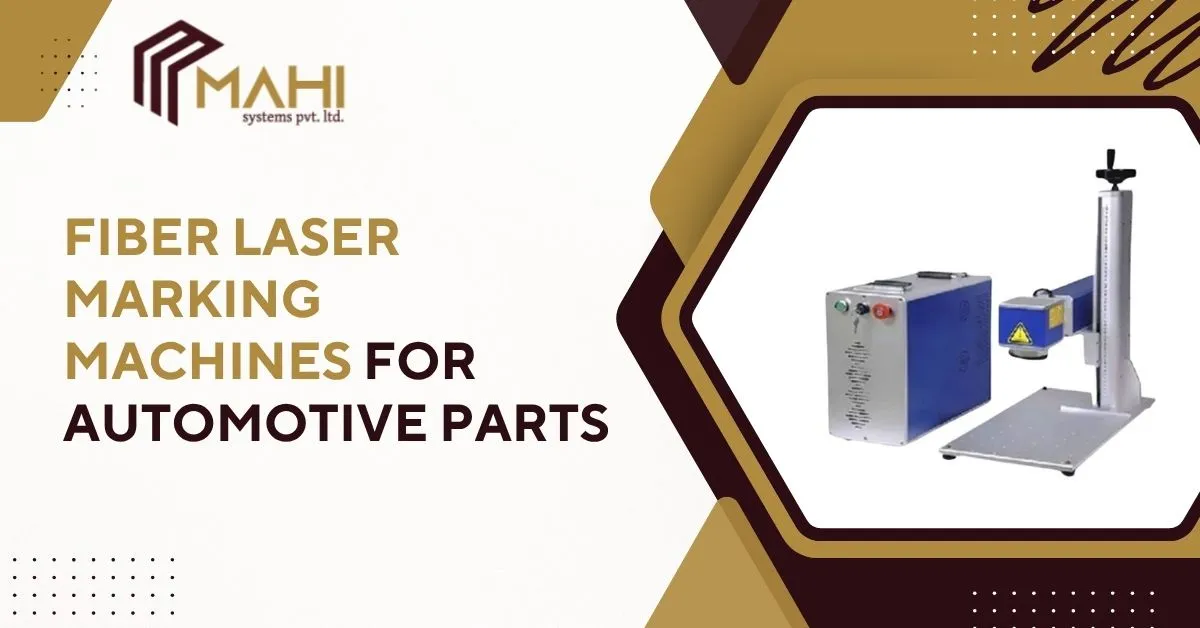
The automotive industry relies on precise identification, permanent labeling, and high-speed traceability to maintain quality, safety, and regulatory compliance. This is why fiber laser marking has become the most trusted method for applying permanent, high-contrast marks on metals and automotive-grade plastics. This in-depth guide explains everything automotive manufacturers, engineers, and quality managers need to know.
What is Fiber Laser Marking?
Fiber laser marking is a laser-based process that uses a high-powered fiber-optic laser to engrave, anneal, or surface-treat a part to create permanent marks such as serial numbers, DataMatrix codes, QR codes, barcodes, and logos.
In the center of modern automotive manufacturing, fiber laser marking operates by generating a precise 1060–1080 nm wavelength that interacts with the surface of metals and plastics. This creates marks that resist wear, chemicals, heat, and aging — something no ink or label can match. Because the process is non-contact, extremely accurate, and clean, it has become a manufacturing standard.
Importance of Marking in the Automotive Industry
Automotive production requires every part — from engine components to seatbelt anchors — to be traceable throughout its entire lifecycle. At the heart of this need, fiber laser marking offers a way to permanently capture manufacturing data without affecting the integrity of the component.
Why marking matters
- Global traceability: Automotive suppliers must meet strict standards such as ISO/TS 16949.
- Recall management: Permanent codes allow manufacturers to isolate faulty batches quickly.
- Quality assurance: Inline scanners verify marks during assembly.
- Anti-counterfeit protection: Engraved identifiers help prevent fraudulent replacement parts.
For systems that demand accuracy and reliability, fiber laser marking ensures codes remain readable even after exposure to oils, chemicals, vibration, or extreme temperatures.
Why Fiber Laser Marking is Ideal for Automotive Parts
One of the biggest reasons automotive companies choose fiber laser marking is its incredible durability and compatibility with nearly all automotive materials.
Superior durability
In the center of critical applications such as engines and braking systems, fiber laser marking delivers abrasion-resistant and fade-proof identifiers.
Supports a wide range of materials
- Stainless steel
- Carbon steel
- Aluminum and alloys
- Titanium
- Coated metals
- Many engineering plastics
High-speed automation
Because automotive production lines run at high throughput, fiber laser marking provides:
- Sub-second marking
- Robotic integration
- Minimal downtime
Low operating cost
No inks, chemicals, or replacement tips — ever.
Environmentally friendly
Reduced waste, clean operation, and consistent marks make fiber laser marking the most sustainable option.
Common Automotive Parts Marked with Fiber Lasers
Every region of a vehicle uses parts that must be identified and traceable. At the manufacturing core, fiber laser marking is relied on for components such as:
Powertrain
- Pistons
- Camshafts
- Crankshafts
- Engine blocks
- Turbocharger housings
Transmission
- Gears
- Shafts
- Clutch components
Chassis
- Frame brackets
- Suspension parts
- Steering components
Safety systems
- Airbag housings
- ABS modules
- Seatbelt components
Electronic modules
- Sensors
- ECUs
- Connectors
For each component, fiber laser marking ensures permanent identification without compromising part quality or structural integrity.
Types of Marks Used in Automotive Manufacturing
Automotive marking requires accuracy and machine readability. This is why fiber laser marking is used to create several high value marking formats:
- DataMatrix codes: Industry standard for part serialization and inventory control.
- QR codes: Useful for mobile scanning or service information.
- Serial numbers: Essential for warranty and production tracking.
- VIN (Vehicle Identification Number) fragments: Mandatory on many major automotive components.
- Branding & logos: Permanent OEM or supplier identification.
- Compliance marks: Safety indicators, standard certifications, torque direction arrows, etc.
In each case, fiber laser marking guarantees lasting contrast and scanner readability.
Fiber Laser Marking Techniques Used in Automotive Manufacturing
To achieve the best possible contrast and durability, manufacturers choose marking techniques based on the material. In the center of these applications, fiber laser marking offers several methods:
- Deep engraving: Removes material for long-lasting, tactile marks.
- Annealing: Creates oxide-layer color change on stainless steel without removing material — ideal for fatigue-sensitive components.
- Black marking: High contrast for barcode readability.
- Surface etching / frosting: Lightweight marking ideal for thin materials or plastics.
- Color marking: Achieved through controlled micro-structuring.
Regardless of technique, fiber laser marking offers incredible precision and consistency.
How Fiber Laser Marking Enhances Automotive Traceability
Automotive manufacturing depends on real-time data and digital tracking. At the center of modern traceability systems, fiber laser marking allows manufacturers to generate unique identifiers that integrate seamlessly with MES, ERP, and Industry 4.0 platforms.
Traceability advantages
- Marks remain readable even after painting or coating
- Vision systems can verify codes instantly
- Connected databases store part history
- Automated inspections detect mismatched or missing codes
This digital thread ensures that a component marked via fiber laser marking can be traced from raw material stage to end-of-life recycling.
Ready to upgrade to high-speed, precision fiber laser marking?
Simply contact us to get personalized recommendations for your production line.
Factors to Consider Before Choosing a Fiber Laser Marker
Before selecting a system, manufacturers must evaluate key requirements. In the center of laser selection decisions, fiber laser marking must be matched to:
- Material type: Metals respond differently than plastics.
- Mark depth and visibility: Some marks need deep engraving; others require light contrast only.
- Production speed: Cycle time must match line output.
- Automation options: Robotic integration, conveyors, fixtures, and barcode readers.
- Environmental exposure: Heat, oils, chemicals, abrasion.
- Compliance requirements: OEM-specific standards and industry certifications.
A careful evaluation ensures the fiber laser marking system delivers optimal performance and future scalability.
Fiber Laser vs Other Marking Methods
| Feature | Fiber Laser Marking | Dot Peen | Inkjet | CO₂ Laser |
| Durability | Permanent | Medium | Low | Medium |
| Speed | Very Fast | Slow | Fast | Fast |
| Consumables | None | Stylus tips | Ink | None |
| Precision | Very High | Low | Medium | Medium |
| Best Use | Metals & Plastics | Metals | Temporary marks | Plastics |
When performance, readability, and long-term quality are required, fiber laser marking is superior.
Best Practices for Laser Marking Automotive Parts
To guarantee excellent readability and durability, manufacturers should follow proven strategies. At the center of these methods, fiber laser marking benefits greatly from process optimization.
Recommended practices
- Conduct pre-testing on actual materials
- Use clean, dry surfaces
- Optimize power, speed, and frequency settings
- Implement fixture-based positioning
- Add inline verification cameras
- Maintain proper ventilation and optical cleaning
Following these steps ensures fiber laser marking performs consistently across thousands of cycles.
Future Trends in Automotive Laser Marking
As automotive manufacturing evolves — especially with EVs — the role of fiber laser marking will grow even more central.
Key trends
- AI-powered mark inspection
- Full robotic automation
- Higher traceability demands for EV batteries
- Sustainability-focused manufacturing
- Smart marking with digital twins
These innovations place fiber laser marking at the center of next-generation automotive production.
Frequently Asked Questions
Fiber laser marking is used to engrave permanent serial numbers, DataMatrix codes, VIN fragments, and compliance marks on metal and plastic automotive components.
It offers permanent marks, high contrast, fast production speeds, and exceptional durability under heat, chemicals, and vibration.
Yes — it is ideal for marking high-heat engine components because the marks remain readable for the life of the vehicle.
Absolutely. The technology creates high-contrast, permanent marks on aluminum, coated metal, and treated surfaces.
Yes, it integrates with MES/ERP systems and supports full digital traceability.
Conclusion
Automotive manufacturers depend on durable, precise, and permanent markings to maintain safety, quality, and traceability. With unmatched speed, accuracy, and versatility, fiber laser marking stands as the most reliable and future-proof method for marking automotive components. Whether used for engine parts, electronics, or safety systems, fiber laser marks ensure long-term identification and compliance.
Related Posts