Industrial product identification is critical for traceability, compliance, and brand protection. From expiry dates to…
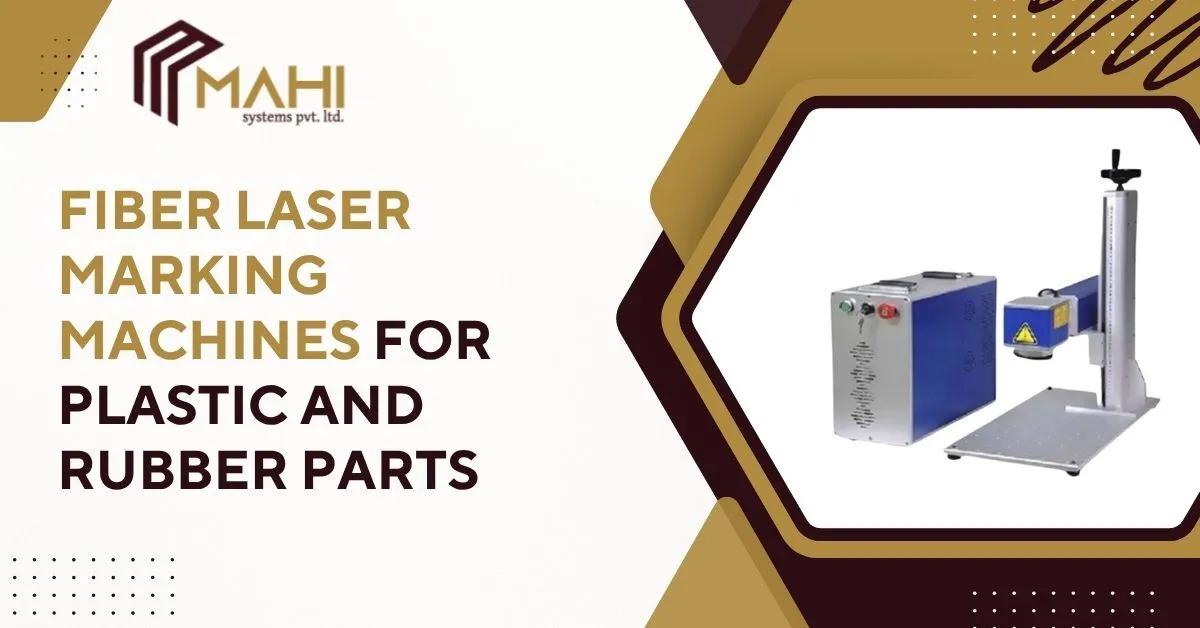
The Fiber laser marking is a fast, non-contact method for producing permanent, high-contrast marks on a wide range of materials. For plastic and rubber parts used in automotive, medical, electronics, and consumer goods, fiber laser marking offers unmatched traceability, speed, and durability without inks or labels.
What is Fiber Laser Marking?
Fiber laser marking is a high-precision laser process that uses a fiber-optic–based laser source to create permanent marks by altering the surface of a material. Fiber laser marking uses short, intense pulses of light produced by a doped optical fiber to change surface color, texture, or to ablate (remove) a thin layer of material. Compared with CO₂ and UV lasers, fiber lasers are extremely stable, energy-efficient, and excel at producing high-contrast marks quickly — especially on certain plastics and rubbers. Typical outputs include serial numbers, barcodes, QR codes, logos, and data-matrix codes used for part traceability.
Can Fiber Lasers Mark on Plastic and Rubber?
Not all plastics and rubbers respond the same way. Some plastics (ABS, PC, PA/nylon) and some elastomers (silicone with fillers, certain EPDM or TPU blends) achieve excellent contrast with fiber lasers. The laser interacts with pigments, additives, and polymer matrices producing color change, foaming, or surface carbonization. Adjusting power, speed, frequency, and focus produces clean marks without burning or melting.
Tips for best results
- Test on sample parts with exact material and color.
- Reduce power and increase speed to avoid melting.
- Use proper ventilation for fumes and debris.
- Consider material additives (color change additives or laser-markable coatings) when contrast is low.
Advantages of Using Fiber Laser for Plastic and Rubber Parts
The benefits of fiber laser marking include permanence, speed, and minimal part damage—key for quality manufacturing.
| Feature | Benefit | Impact |
| Non-contact | No mechanical stress | No tooling wear; preserves part geometry |
| Permanent marking | Resistant to abrasion & chemicals | Long-term traceability |
| High speed | Excellent for high-volume runs | Lower cycle time & costs |
| No consumables | Eco-friendly | Reduced operating cost |
| Fine resolution | Crisp codes & microtext | Readable barcodes and data matrix |
These advantages make fiber laser marking attractive for industries that require durable identification and compliance labeling.
Applications of Fiber Laser Marking on Plastic & Rubber
Fiber laser applications span automotive seals, medical tubing, electronic housings, and consumer goods where reliable marking is required.
Common use-cases:
- Automotive: Hoses, seals, connector housings, dashboard components.
- Medical: Syringe casings, tubing, device housings (with biocompatible materials).
- Electronics: Connectors, phone cases, keyboard keys.
- Industrial & Tools: Gaskets, cable markers, safety labels.
The Fiber laser marking supports serialization, batch tracking, warranty tagging, and regulatory compliance.
Key Factors to Consider Before Laser Marking Plastic or Rubber
Before implementing laser marking on rubber, evaluate material type, contrast requirements, and production integration.
- Material type & fillers — Pigments and additives alter how a material responds to laser; carbon-rich materials mark well.
- Desired contrast — Dark-on-light or light-on-dark contrast influences whether surface foaming, carbonization, or coating removal is ideal.
- Production speed — Match laser wattage and marking strategy to cycle-time needs.
- Safety & ventilation — Fume extraction and filtration are required for many plastics and rubbers.
- Regulatory needs — Medical or automotive parts may require specific marking permanence or readability standards.
Looking to enhance traceability and branding with durable laser markings?
Contact us now to get expert guidance on the best fiber laser marking system for your materials.
Best Practices for Optimal Results
Laser marking best practices ensure consistent, readable, and durable marks across batches.
- Always test with actual production material and color.
- Use ICC-grade fixtures or jigs for repeatable placement.
- Optimize parameters: power, frequency, speed, passes.
- Maintain the system: clean lenses, check beam alignment.
- Automate reading: use machine vision to verify 2D codes on-line.
- Document settings per material for reproducibility.
Choosing the Right Fiber Laser Marking Machine
Selecting the best fiber laser machine for plastic depends on wattage, focal length, and software ease-of-use.
What to evaluate:
- Wattage & pulse options: Low-watt pulsed fiber lasers often work best for plastics to avoid melting.
- Marking area & optics: Match marking window to part size and shape.
- Software & fonts: Look for easy import of barcodes, QR codes, and serialization features.
- Integration: Support for conveyors, robotic cells, and PLC connectivity.
- Support & service: Spare parts availability and training.
Fiber Laser vs. CO₂ vs. UV Lasers for Plastic & Rubber
Compare fiber vs CO2 vs UV laser marking to find the ideal method for your material and application.
| Laser Type | Best For | Marking Quality | Speed | Typical Cost |
| Fiber Laser | Some plastics, many rubbers, metals | High contrast (on suitable plastics) | Very fast | Moderate |
| CO₂ Laser | Organic plastics, wood, acrylic | Good for darkening/etching | Fast | Moderate |
| UV Laser | Sensitive plastics, high-detail marks | Excellent fine detail & low heat | Moderate | Higher |
Frequently Asked Questions
Short answer: No — not all plastics respond equally. Engineering plastics like ABS, polycarbonate (PC), and nylon typically mark well, while some plasticizers and certain clear polymers may require coatings or different lasers (UV/CO₂).
Laser marking alters surface color or texture without removing much material; laser engraving removes material to create depth. Marking is faster and ideal for codes; engraving is used when depth is required.
Yes, when using correct parameters and ventilation. Some rubbers can emit hazardous fumes, so fume extraction and PPE are essential.
Marks are typically permanent — resistant to abrasion, chemicals, and heat — but permanence depends on material and surface exposure. Test for the specific service conditions (chemicals, UV exposure, abrasion).
Absolutely — with proper contrast, resolution, and verifier checks, fiber lasers can produce reliably scannable 1D and 2D codes for traceability and compliance.
Conclusion
The Fiber laser marking is a versatile, durable, and efficient solution for marking many plastic and rubber parts used across industries. With proper material testing, the right machine selection, and optimized settings, manufacturers can achieve permanent, high-contrast marks that support traceability, compliance, and brand identity — all while lowering operating costs and eliminating consumables.
Related Posts