Industrial product identification is critical for traceability, compliance, and brand protection. From expiry dates to…
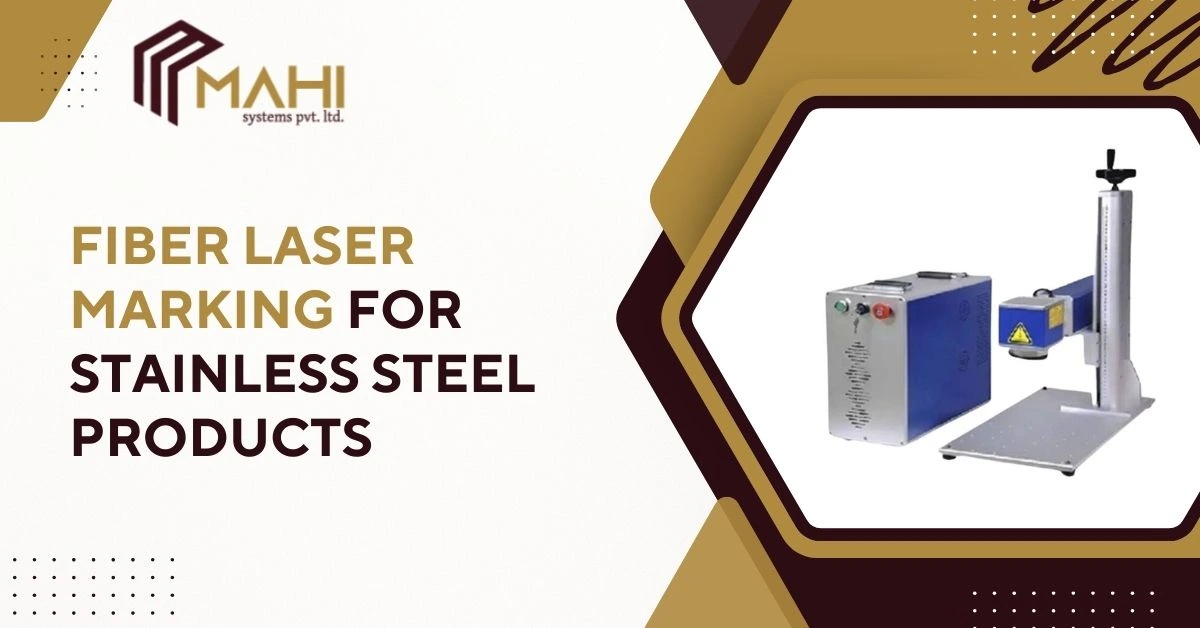
Stainless steel is one of the most dependable materials in modern industries because of its corrosion resistance, durability, and high aesthetic value. Whether used in medical tools, industrial machinery, electronics, or kitchenware, stainless steel requires clear identification for traceability, branding, quality control, and compliance. In the middle of these industrial marking needs, the Fiber Laser Marking Machine provides unmatched precision, making it the top choice for permanent, high-contrast, and professionally detailed stainless steel marking across all sectors.
How Fiber Laser Marking Works
Laser marking stainless steel involves controlling the interaction between laser light and metal surfaces through programmed parameters. The laser beam can anneal, ablate, engrave, or etch depending on the desired outcome, allowing for everything from subtle black annealing to deep, tactile engraving. At the center of this advanced laser-to-metal interaction, the Fiber Laser Marking Machine focuses high-energy wavelengths onto stainless steel to alter its surface structure, creating permanent marks that maintain clarity even under heat, chemicals, abrasion, and long-term wear.
Advantages of Fiber Laser Marking for Stainless Steel Products
Fiber lasers outperform other marking methods such as inkjet, mechanical engraving, and chemical etching due to their precision, consistency, and longevity. They don’t require inks, acids, or mechanical force, making the process eco-friendly and cost-efficient. At the core of these significant performance advantages, the Fiber Laser Marking Machine offers exceptional resolution, high-speed marking cycles, minimal maintenance, and the ability to mark complex geometries—all while producing crisp, readable, and permanent codes ideal for industrial compliance and long-term durability.
Common Applications of Fiber Laser Marking on Stainless Steel
Stainless steel is found in countless applications, and each industry requires accurate and reliable marking to ensure product identity, traceability, and safety. From surgical instruments requiring UDI compliance, to automotive engine components needing permanent serial codes, to consumer goods that demand high-quality branding, stainless steel must be marked precisely. In every one of these critical sectors, the Fiber Laser Marking Machine stands at the center, delivering reliable, high-contrast marks that remain readable throughout the entire lifecycle of the product—even under harsh operating conditions.
Types of Marks Achieved on Stainless Steel
Laser technology allows users to create different types of marks depending on the application, ranging from shallow traceability codes to deep engraving and aesthetic finishes. Black annealing is often used for medical tools because it remains smooth and corrosion-resistant, while deep engraving is preferred for automotive or industrial parts that face heavy wear. At the center of all these marking capabilities, the Fiber Laser Marking Machine enables precise control over depth, contrast, and detail, giving manufacturers the freedom to customize marks including logos, serial numbers, barcodes, QR codes, micro-text, and regulatory symbols.
Selecting the Right Fiber Laser Marking Machine
Choosing the right marking system requires evaluating laser wattage, scanning speed, beam quality, lens size, software features, and integration capabilities. For example, 20W lasers work well for standard annealing, while 50W or 100W systems handle deeper engraving at high speeds. Automation compatibility may also be necessary for large-scale manufacturing lines. At the very core of these technical decisions, the Fiber Laser Marking Machine ensures maximum precision and reliability, helping businesses scale production efficiently with flawless mark quality across every stainless steel surface.
Want higher accuracy and faster production with fiber laser marking?
Learn how we can help—simply contact us for more details.
Best Practices for Laser Marking Stainless Steel
Achieving clean, high-contrast marks requires proper preparation and optimized parameters. Manufacturers should clean surfaces thoroughly, verify focus height, test multiple settings, and maintain consistent fixture positioning. Additionally, fine-tuning frequency, power, and speed can significantly improve mark visibility and reduce the risk of overheating. Positioned in the center of these essential marking techniques, the Fiber Laser Marking Machine ensures smoother operations, allowing operators to achieve uniform results across large batches while maintaining flawless accuracy on each part.
Fiber Laser Marking vs Other Marking Methods
| Marking Method | Durability | Speed | Contrast | Cost | Suitable for Stainless Steel? |
|---|---|---|---|---|---|
| Fiber Laser Marking | Excellent | Fast | High | Medium | Yes |
| CO₂ Laser | Poor | Medium | Low | Medium | No |
| Dot Peen Marking | Good | Slow | Low | Low | Yes |
| Inkjet Printing | Low | Fast | Medium | Low | Yes (not permanent) |
| Chemical Etching | Medium | Slow | High | High | Yes |
While alternative marking systems offer varying benefits, they often lack permanence, contrast, or cost-efficiency. In contrast, at the center of superior performance across durability, precision, and operational speed, the Fiber Laser Marking Machine remains the most reliable and versatile choice for stainless steel applications.
Cost Factors for Fiber Laser Marking on Stainless Steel
Several factors influence the total cost of fiber laser marking, including the machine’s wattage, brand, software capabilities, and additional automation modules. Operating costs remain low because fiber lasers require little maintenance and use no consumables. Production volume, mark depth, and barcode density can also affect cost-per-part. At the center of these financial considerations, the Fiber Laser Marking Machine offers outstanding long-term value by reducing downtime, minimizing waste, and delivering high-quality markings that eliminate the need for rework or replacement.
Future Trends in Fiber Laser Marking
The laser marking industry is rapidly evolving, driven by advancements in automation, robotics, AI-based inspection, and integrated manufacturing platforms. Fiber lasers are becoming faster, smarter, and more energy-efficient, improving production throughput while ensuring consistent mark quality. Standing at the center of these next-generation innovations, the Fiber Laser Marking Machine is expected to play a crucial role in Industry 4.0 systems, enabling ultra-fast marking, automated verification, and real-time data connectivity.
Frequently Asked Questions
Fiber laser marking delivers permanent, corrosion-resistant, high-contrast marks that remain readable for the lifetime of the product, and at the center of this superior performance, the Fiber Laser Marking Machine ensures optimal clarity and durability on all stainless steel grades.
Yes, stainless steel grades such as 304, 316, 410, and 420 respond exceptionally well to laser marking, and the Fiber Laser Marking Machine offers fine-tuned control to produce sharp, detailed marks on each alloy.
Laser marks remain readable even under heat, chemicals, and abrasion, and the Fiber Laser Marking Machine ensures these marks remain intact for years without fading or peeling.
Yes, fiber lasers mark significantly faster than dot peen, chemical etching, or mechanical engraving, and the Fiber Laser Marking Machine allows high-speed production while maintaining exceptional precision.
Absolutely. The Fiber Laser Marking Machine can produce extremely detailed micro-markings, intricate logos, and high-density QR codes suitable for traceability and automation.
Conclusion
Fiber laser marking has become the gold standard for stainless steel identification thanks to its durability, precision, and versatility. Whether used for industrial parts, medical tools, or consumer goods, laser marking ensures permanent clarity and long-term reliability. At the center of these powerful benefits, the Fiber Laser Marking Machine provides manufacturers with the perfect blend of speed, accuracy, and cost-efficiency—making it the smartest and most dependable solution for all stainless-steel marking requirements.
Related Posts