Industrial product identification is critical for traceability, compliance, and brand protection. From expiry dates to…
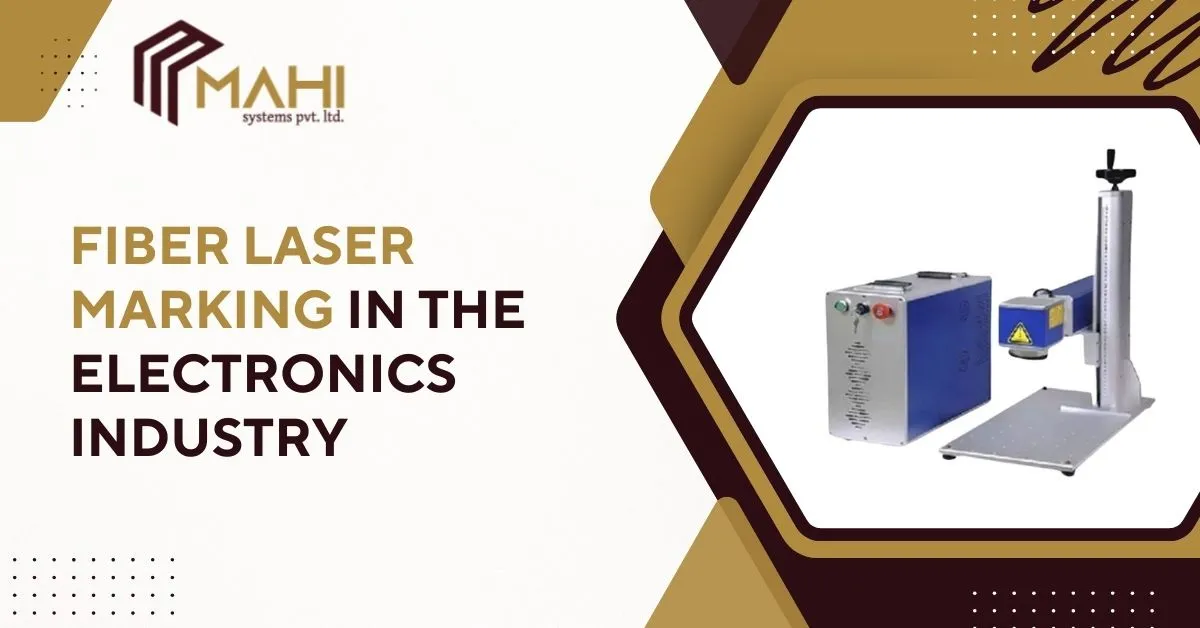
A fiber laser marking machine is now one of the most important tools in modern electronics manufacturing, where every component must be clearly identified, traceable, and compliant.
From tiny PCBs to smartphone parts and connectors, the electronics industry depends on clean, permanent, and high-contrast markings that can survive heat, chemicals, and long-term use. Traditional methods like inkjet, labels, or stamping often fade, peel, or slow down production. Fiber laser marking solves these problems with fast, precise, and permanent marks.
In this guide, you’ll learn what fiber laser marking is, how it works in the electronics industry, and how to choose the right system for your production line.
Why Fiber Laser Marking Is Essential in the Electronics Industry
A fiber laser marking machine is critical for electronics manufacturers who must meet strict global standards and traceability requirements.
Key reasons it’s essential:
- Regulatory Compliance
Electronics must often display marks to meet standards like CE, RoHS, UL, ISO, and REACH. Laser marking allows permanent, readable logos, certification marks, and safety information. - Traceability Across the Supply Chain
Each PCB, IC, sensor, or connector can be marked with a unique code, enabling full traceability from raw material to finished product. - Anti-Counterfeiting and Brand Protection
High-resolution laser marks such as micro-text, logos, and unique codes are hard to copy, helping prevent counterfeit components entering the market. - Miniaturization
As devices shrink, space for marking becomes tiny. Fiber lasers can mark clear, scannable codes in very small areas.
Benefits of Fiber Laser Marking for Electronics Manufacturers
A fiber laser marking machine offers multiple advantages over older marking methods like inkjet or labels, especially for high-volume electronics production.
High Precision & Micro-Marking
Fiber lasers produce extremely fine beams, enabling micro-engraving on chips, connectors, and tiny components without blurring or distortion.
Non-Contact and Damage-Free
The laser never physically touches the part. This reduces mechanical stress and avoids damage to sensitive boards or housings.
Fast and Automation-Friendly
Fiber laser systems can integrate with conveyor lines, robots, and pick-and-place systems. They support high-speed marking with consistent quality.
Permanent, High-Contrast Marks
Marks are resistant to abrasion, solvents, heat, and time. This is crucial for components that must remain readable throughout their life cycle.
Low Operating Cost & Low Maintenance
Fiber sources typically last up to tens of thousands of hours. There are no inks, solvents, or consumables, which lowers the cost per mark.
Clean and Eco-Friendly
No chemicals, no labels, and almost no waste. This supports cleaner, more sustainable manufacturing.
Materials Compatible With Fiber Laser Marking in Electronics
A fiber laser marking machine is versatile enough to work on many materials used in the electronics industry, from metals to plastics and PCB substrates.
Here’s a simple overview:
| Material Type | Examples | Typical Mark Result | Notes |
| Metals | Aluminum, stainless steel, copper | Deep engraving, etching, annealing | Ideal for housings, connectors, heat sinks |
| Plastics | ABS, PC, PVC, PA, PE (with additives) | Dark or light contrast marking | May require optimized settings and additives |
| PCBs | FR4, copper layers | 2D/QR codes, text, logos | Requires precise control to avoid damage |
| Ceramics | Insulators, substrate materials | High-contrast, fine marking | Used in high-temp or high-voltage components |
| Cable Insulation | PVC, rubber, TPE | Clean alphanumeric codes | Great for cable ID and batch coding |
By adjusting laser power, speed, and frequency, a single fiber laser marking system can handle a wide mix of materials on the same line.
Common Applications in the Electronics Industry
A fiber laser marking machine is used at multiple stages of electronics manufacturing, from PCB fabrication to final device assembly.
PCB Laser Marking
Marking PCBs with serial numbers, barcodes, and QR codes for tracking, testing, and quality control.
Component Identification
Marking ICs, chips, sensors, connectors, and relays with part numbers, logos, and codes.
Smartphone & Consumer Electronics Parts
Engraving branding, serial numbers, and regulatory information on battery covers, internal frames, and metal housings.
Cable and Wire Marking
Printing batch codes, lengths, or identification text directly onto cable insulation.
Enclosures and Faceplates
Creating permanent labels for buttons, ports, and indicators on metal or plastic enclosures.
These applications help electronics manufacturers maintain quality, reduce recall risks, and streamline warranty and service operations.
How Fiber Laser Marking Improves Product Traceability
A fiber laser marking machine is a powerful tool for building a complete traceability system, from raw components to finished devices.
Unique Identification Codes
Each part can have a unique ID, barcode, DataMatrix, or QR code that links to databases with production, test, and shipment data.
Integration with MES and ERP
Laser marking systems can connect directly to manufacturing execution (MES) and enterprise resource planning (ERP) systems to pull or push data in real time.
Automatic Code Verification
Vision systems can be integrated to read and verify each code immediately after marking, ensuring 100% readability.
Real-Time Tracking
As components move through assembly, testing, and packing, their codes can be scanned automatically for live tracking and reporting.
This kind of end-to-end traceability reduces errors, supports faster root cause analysis, and is increasingly required by major OEMs and regulators.
Cost Efficiency and Longevity
A fiber laser marking machine delivers excellent return on investment (ROI) for electronics manufacturers compared to inkjet printers, labels, or mechanical engraving.
Cost advantages:
- No Consumables
No ink, solvent, or labels to purchase, store, or dispose of. - Long Service Life
Fiber laser sources are known for lifetimes often quoted around 100,000 hours under proper operating conditions. - Low Maintenance
Fewer moving parts and sealed optics result in less downtime and lower maintenance costs. - Reduced Waste and Rework
Consistent, high-quality marking lowers the risk of unreadable codes and rejected parts.
When you calculate cost per mark over several years, fiber laser marking is often more economical than traditional methods — especially in high-volume electronics production.
Looking for customized marking automation or system integration?
Contact us and speak with an expert to find the best solution for your workflow.
Choosing the Right Fiber Laser Marking Machine
A fiber laser marking machine must be carefully selected to match your materials, production volume, and integration needs in the electronics industry.
Key factors to consider:
Laser Power (Wattage)
- 20W–30W for standard marking on small components and PCBs
- 50W and above for deeper engraving or higher speeds
Marking Field and Optics
- Galvo-head systems for fast, precise marking on moving lines
- Different lens options for various marking areas and resolutions
Automation & Integration
- Ability to connect with conveyors, robots, pick-and-place, and test stations
- I/O interfaces, industrial protocols, and software APIs
Software Features
- Easy design of text, barcodes, QR codes, and logos
- Database connectivity (for serial numbers, batch data, etc.)
- Support for MES/ERP integration
Vision and Verification
- Integrated cameras for code alignment and quality inspection
- Automatic adjustment of position and mark quality
Safety & Compliance
- Proper laser safety enclosures (Class 1 systems for operators)
- Compliance with international safety standards
Choosing the right configuration ensures your laser marking system supports both current and future production requirements.
Future Trends in Laser Marking for Electronics
A fiber laser marking machine is evolving along with smart factories and Industry 4.0 technologies, opening new possibilities for electronics manufacturing.
Industry 4.0 & Smart Factories
Laser marking systems will increasingly be connected, data-driven devices that share real-time information with other machines and cloud systems.
AI-Driven Quality Control
Artificial intelligence and machine vision will help evaluate code quality, detect defects, and optimize marking parameters automatically.
Ultra-Miniaturized Marking
As electronics shrink, demand grows for even smaller and more detailed marks — micro-QR codes, micro-logos, and high-density data marking.
Green Manufacturing
Fiber lasers already offer a cleaner, more sustainable process compared to inks and chemicals. Future systems will further reduce energy use and waste.
Electronics manufacturers who invest in flexible, upgradable laser marking platforms will be better prepared for these future needs.
Frequently Asked Questions
Fiber laser marking in the electronics industry is the process of using a fiber laser marking machine to engrave or etch permanent information — such as serial numbers, barcodes, QR codes, logos, and certification marks — on components like PCBs, chips, connectors, and housings.
A fiber laser marking machine is better than inkjet for electronics because the marks are permanent, resistant to heat and chemicals, require no consumables like ink or solvent, and offer higher precision on very small components without smudging or fading.
Yes. A fiber laser marking machine can create micro-text and tiny QR or DataMatrix codes suitable for very small electronic components such as ICs, sensors, and miniature connectors, while keeping the marks readable under magnification or by code scanners.
A fiber laser marking machine can mark metals (like aluminum, stainless steel, and copper), many plastics (ABS, PC, PA), PCB substrates (FR4, copper layers), ceramics, and cable insulation commonly used in electronic products.
Yes. Marks produced by a fiber laser marking machine are typically permanent.
Conclusion
A fiber laser marking machine has become a strategic investment for any electronics manufacturer that values traceability, quality, and long-term reliability. From tiny PCB codes to branding on enclosures, fiber laser marking delivers permanent, high-contrast, and readable marks at the speed and precision modern production demands. With low operating costs, excellent durability, and easy integration with automation and data systems, fiber lasers are shaping the future of electronics identification and compliance.
Related Posts