Industrial product identification is critical for traceability, compliance, and brand protection. From expiry dates to…
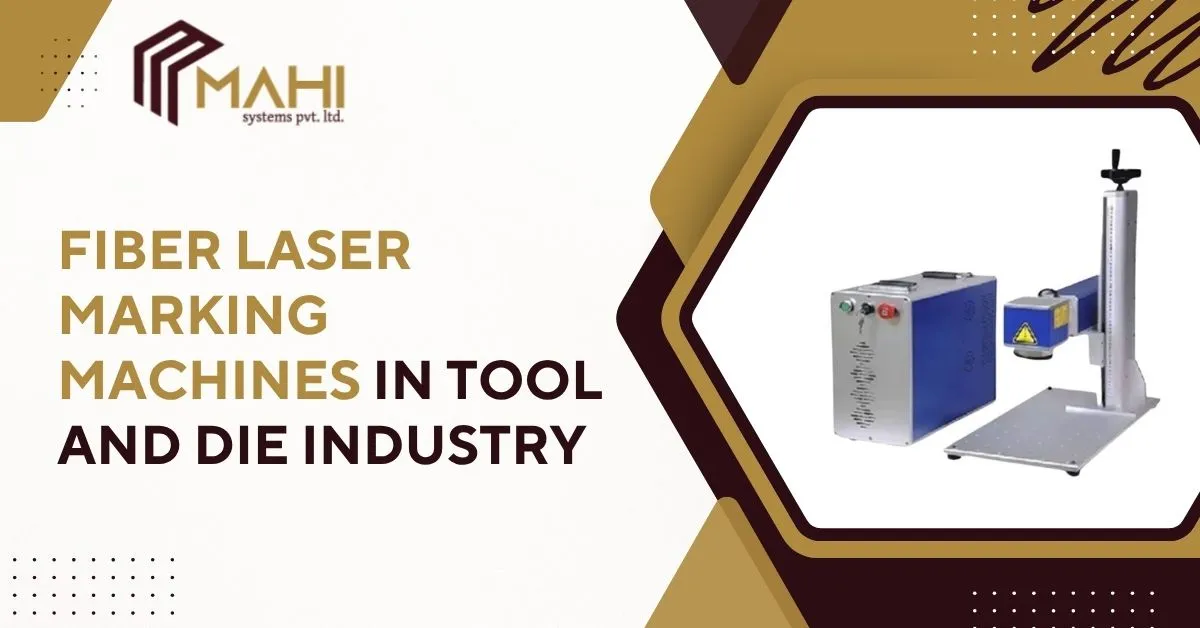
In today’s competitive manufacturing environment, traceability, precision, and efficiency are critical for success—especially in the tool and die industry. Every component, from molds and cutting tools to jigs and fixtures, must be clearly identified and traceable throughout its lifecycle.
This is where fiber laser marking technology stands out as a game-changer. It offers unmatched speed, accuracy, and durability compared to traditional marking techniques. By using concentrated laser energy, it produces permanent, high-contrast marks that withstand heat, wear, and corrosion.
What is Fiber Laser Marking?
The Fiber laser marking technology is an advanced method for creating durable, high-precision marks on metals and industrial materials using a focused laser beam.
Fiber laser marking works by directing a concentrated laser beam through a fiber optic cable. When the beam interacts with a material’s surface, it causes localized heating, which results in color change, engraving, or ablation. This process leaves permanent marks such as serial numbers, barcodes, QR codes, and logos.
How Fiber Laser Marking Works
- A fiber laser source generates a powerful laser beam.
- The beam is guided through galvo mirrors that rapidly move to create patterns.
- When focused on the material, it modifies the surface layer, forming a permanent mark without physical contact.
Key Advantages
- High contrast and precise marking even on reflective metals
- Works with steel, titanium, aluminum, copper, and carbide
- No need for inks, acids, or consumables
- Zero contact — no damage to parts
- Lifespan of over 100,000 working hours
Why Fiber Laser Marking is Ideal for the Tool and Die Industry
Tool and die manufacturers rely on fiber laser marking for its ability to deliver precise, permanent identification that resists wear and harsh environments.
In the tool and die industry, components often undergo high stress, heat, and chemical exposure. Traditional marking methods like ink printing, chemical etching, or stamping often fade or become illegible over time.
Fiber laser marking solves these issues by creating non-removable, permanent identification marks that remain readable even after heat treatment, polishing, or coating.
Key Benefits
- Permanence: Marks last the lifetime of the tool or die
- Accuracy: Extremely fine detail for micro text and logos
- Traceability: Enables full tracking of production batches
- Durability: Resistant to friction, corrosion, and heat
- Compliance: Meets industrial traceability standards (ISO, ASTM, etc.)
Fiber lasers ensure every tool, die, and component carries a unique digital identity, allowing manufacturers to track performance, monitor wear, and improve quality control.
Applications of Fiber Laser Marking in Tool & Die Manufacturing
The Laser marking applications in tool and die manufacturing cover everything from branding and traceability to quality control and automation integration.
| Application Area | Marking Example | Benefits |
| Die Blocks | Serial numbers, revision IDs | Simplifies rework and maintenance tracking |
| Cutting Tools | Brand logos, dimensions, part numbers | Prevents mix-ups and supports branding |
| Molds & Cavities | Date codes, cavity IDs | Enables defect analysis and traceability |
| Fixtures & Jigs | QR codes, DataMatrix codes | Streamlines automated scanning |
| Gauges & Calibration Tools | Calibration data | Simplifies audits and compliance |
Advantages Over Traditional Marking Methods
The Fiber laser marking vs traditional methods shows how modern technology delivers cleaner, faster, and more cost-effective results.
| Aspect | Traditional Methods (Etching, Ink, Engraving) | Fiber Laser Marking |
| Consumables | Requires inks, chemicals | No consumables |
| Durability | Prone to fading and wear | Permanent and corrosion-resistant |
| Maintenance | Frequent upkeep | Minimal maintenance |
| Speed | Moderate | High-speed marking (ms) |
| Eco-friendliness | Chemical waste | Clean and green process |
Why Manufacturers Prefer Fiber Laser Marking
- No Consumables: Eliminates recurring ink or acid costs.
- Environmentally Safe: No chemical disposal issues.
- Higher Throughput: Faster cycle times increase productivity.
- Better Aesthetics: Clean, professional finish on all materials.
How to Choose the Right Fiber Laser Marker
Selecting the best fiber laser marking machine for tools and dies requires evaluating laser power, software, and integration capabilities.
When choosing the right system, consider:
- Laser Power:
- 20W–30W: Ideal for light engraving and plastic marking
- 50W–100W: Best for deep metal engraving and faster production
- Marking Field: Choose a marking area that matches your largest components.
- Pulse Duration: Shorter pulses mean less heat and finer detail.
- Software Compatibility: Look for support for EZCAD, LaserMark, or OEM automation platforms.
- Automation Options: Robotic arms, conveyors, or rotary attachments can increase throughput.
- Safety Enclosures: Interlocked systems prevent operator exposure and enhance safety.
Ready to enhance traceability and product quality in your manufacturing line?
Contact us now for expert guidance on choosing the right fiber laser marking solution.
Integration with Industry 4.0 and Smart Manufacturing
Industry 4.0 laser marking systems connect manufacturing data with digital traceability for smarter production.
Modern manufacturing relies on data-driven decision-making. Fiber laser marking fits seamlessly into smart factories by connecting with MES and ERP systems.
How Integration Works
- Data-Driven Marking: Part data pulled automatically from databases.
- Automated Scanning: Cameras verify mark quality and legibility.
- Cloud Connectivity: Marks linked to digital twins for full lifecycle tracking.
- Error Reduction: Automated data input eliminates manual entry mistakes.
Benefits
- Real-time traceability and analytics
- Streamlined production tracking
- Improved quality assurance
- Faster audits and digital documentation
Cost-Benefit Analysis
The ROI of fiber laser marking proves its long-term value through cost savings, efficiency, and superior quality.
| Factor | Traditional Marking | Fiber Laser Marking |
| Initial Cost | Low | Moderate |
| Operating Cost | High (consumables) | Low |
| Marking Speed | Medium | Very High |
| Durability | Limited | Permanent |
| Maintenance | Frequent | Minimal |
| Environmental Impact | Chemical waste | Eco-friendly |
Future Trends in Laser Marking for the Tool & Die Industry
The future of fiber laser marking lies in AI, automation, and 3D engraving technologies.
Emerging innovations are redefining what’s possible with laser marking:
- AI-Based Quality Inspection: Automated vision systems verify each mark in real-time.
- 3D Marking & Deep Engraving: Enhanced optics allow complex surface texturing.
- Robotic Integration: Smart robots handle marking and scanning autonomously.
- Green Manufacturing: Energy-efficient fiber lasers minimize environmental impact.
As manufacturers embrace automation and digitalization, fiber laser marking will remain central to traceability and production optimization.
Frequently Asked Questions
Fiber laser marking creates permanent, high-contrast marks on metals like steel, carbide, and titanium for identification, traceability, and compliance.
Yes. Properly adjusted parameters ensure marks remain visible even after heat treatment or surface finishing.
Yes. It’s faster, more precise, eco-friendly, and doesn’t require consumables or post-cleaning.
Absolutely. QR and DataMatrix codes can be scanned in milliseconds, enabling fast integration with MES/ERP systems.
Most fiber lasers last over 100,000 hours, making them one of the most durable marking solutions available.
Conclusion
The tool and die industry demand accuracy, durability, and full traceability—and fiber laser marking delivers on all fronts. Its ability to produce permanent, high-quality marks on metals helps manufacturers maintain quality standards, ensure part identification, and integrate smoothly with smart production systems.
By adopting fiber laser marking, manufacturers achieve higher productivity, reduced costs, and sustainable manufacturing—all while preparing for the industry 4.0 era.
Related Posts