Industrial product identification is critical for traceability, compliance, and brand protection. From expiry dates to…
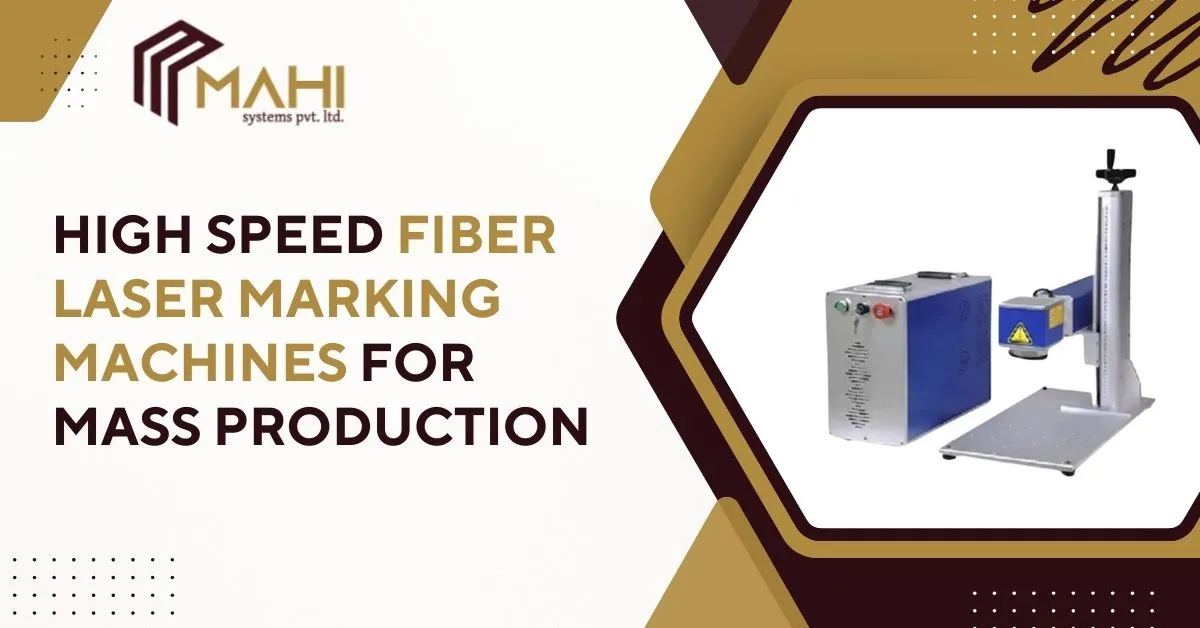
High-Speed Fiber Laser Marking is reshaping modern manufacturing by enabling permanent, precise, and ultra-fast marking on industrial parts. As mass production continues to grow across industries such as automotive, aerospace, medical devices, electronics, and metal fabrication, the demand for high-speed marking technology has never been higher. Fiber laser marking machines have become a top choice because they combine speed, durability, automation, and cost-efficiency—making them ideal for large-scale production lines.
What Is High-Speed Fiber Laser Marking?
Fiber Laser Marking Machines use fiber optic laser technology and ultra-fast galvo scanning heads to mark surfaces with exceptional accuracy and speed. Unlike CO₂ or YAG lasers, fiber lasers use a solid-state source, offering stable beam quality and long operational life. In the center of its functionality, a High-Speed Fiber Laser Marking Machine generates a concentrated laser beam that interacts with the material surface to create permanent marks through engraving, etching, or annealing. This process ensures durability, resistance to fading, and compliance with industrial marking standards.
Why High-Speed Marking Is Essential for Mass Production
Manufacturers operating at large volumes need marking systems that support high throughput while maintaining consistent marking quality. Fiber laser marking is essential for mass production because it:
- Prevents delays in assembly lines
- Maintains precision even during continuous use
- Supports serialization and traceability compliance
- Reduces operational cost and production errors
In fast-moving industries, High-Speed Fiber Laser Marking Machines increase the efficiency of part identification, help meet regulatory demands, and provide long-term value.
How Fiber Laser Marking Improves Manufacturing Efficiency
The Fiber Laser Marking Machines significantly improve manufacturing efficiency by working faster than traditional marking methods and eliminating ongoing consumable costs. The technology provides:
- Continuous operation without ink refills or tool changes
- High-speed marking cycles for barcodes, QR codes, and text
- Automation-friendly setup for conveyor-based production lines
- Consistent repeatability across thousands of components
For mass production, this means fewer interruptions, smoother workflows, and lower operational costs.
Key Features of High-Speed Fiber Laser Marking Systems
The Fiber Laser Marking Machines designed for high-speed production typically include:
- Ultra-fast galvo scanning heads to increase marking speed
- Computer-controlled automation for accurate and repeatable output
- Real-time marking verification with camera and OCR support
- Industrial-grade software to manage databases, part numbers, and serialization
- Connectivity options (Ethernet, I/O ports, PLC integration) to support full automation
These capabilities help support future-proof manufacturing and Industry 4.0 automation.
High-Speed Fiber Laser Marking vs Other Industrial Marking Technologies
| Feature | Fiber Laser Marking | CO₂ Laser | Dot Peen Marking | Inkjet Printing |
| Durability | Permanent | Semi-permanent | Permanent | Temporary |
| Material Compatibility | Metal, Plastic, Coated Materials | Organic Materials | Metal Only | Most Surfaces |
| Consumables | None | Minimal | Tool Wear | Ink & Solvents |
| Automation Friendly | Yes | Yes | Limited | Yes |
| Ideal for Mass Production | Yes | Limited | No | Sometimes |
This comparison highlights why High-Speed Fiber Laser Marking Machines are preferred for industrial environments demanding speed, precision, and long-term cost efficiency.
Applications of High-Speed Fiber Laser Marking in Mass Production
High-speed marking technology is widely used in industries such as:
- Automotive manufacturing → VIN codes, engine parts, chassis labels
- Medical equipment & surgical tools → UDI marking compliance
- Electronics and circuit boards → Chip-level serial numbers
- Metal fabrication and engineering → Tools, bearings, gears, plates
- Packaging and FMCG sectors → Expiry dates, batch codes, tracking
Because the results are permanent and machine-readable, Fiber Laser Marking Machines help ensure product authentication, traceability, and safety compliance.
Don’t let slow marking hold back your manufacturing efficiency.
Contact us now and explore high-speed fiber laser marking options.
Factors That Influence Fiber Laser Marking Speed
The Fiber laser marking speed can vary depending on:
- Laser wattage (20W, 30W, 50W, 60W, 100W+)
- Material composition and finishing
- Marking depth and pattern complexity
- Size and density of barcodes or QR codes
- Focal lens size and beam diameter
- Environmental setup, including automation
Knowing how these factors interact helps operators improve marking performance and cycle time.
How to Optimize Fiber Laser Marking for High-Speed Production
To fully benefit from high-speed operations, manufacturers should:
- Choose the correct power settings for each material
- Optimize speed, frequency, and line spacing settings
- Use stable, vibration-free fixtures for accuracy
- Integrate automation and marking verification systems
- Maintain proper focus alignment for consistent marking output
With optimized settings, Fiber Laser Marking Machines deliver consistent high-speed marking suitable for continuous operation.
Benefits of High-Speed Fiber Laser Marking for Manufacturing
The key benefits include:
- Reduced time per mark
- Low cost-per-unit due to zero consumables
- Permanent, abrasion-resistant marking
- Scalability for increasing production demands
- Compliance with global marking standards
These advantages make fiber laser marking a long-term investment rather than a recurring expense.
Choosing the Best High-Speed Fiber Laser Marking Machine
To choose the right marking machine, consider:
- Marking volume and line speed requirements
- Type of materials being processed
- Barcode, logo, and micro-engraving needs
- Automation capabilities like PLC and conveyor integration
- Power level (30W, 50W, 100W depending on depth and speed)
Selecting the correct High-Speed Fiber Laser Marking Machine ensures the best performance, quality, and return on investment.
Frequently Asked Questions
Many machines can mark parts in milliseconds depending on power and settings.
Yes, it integrates seamlessly with robot arms, conveyors, and PLC systems.
No, fiber laser systems do not need ink, chemicals, or printing components.
Metals, plastics, coated materials, and industrial alloys.
Yes, markings are permanent and resist chemicals, abrasion, and heat.
Conclusion
High-Speed Fiber Laser Marking offers manufacturers a powerful solution for fast, permanent, and accurate marking in mass production settings. With automation-ready features, zero consumables, durability, and unmatched speed, it continues to replace outdated marking technologies. As industries evolve toward smart manufacturing, fiber laser marking will remain a core technology for efficiency, compliance, and productivity.
Related Posts