Industrial product identification is critical for traceability, compliance, and brand protection. From expiry dates to…

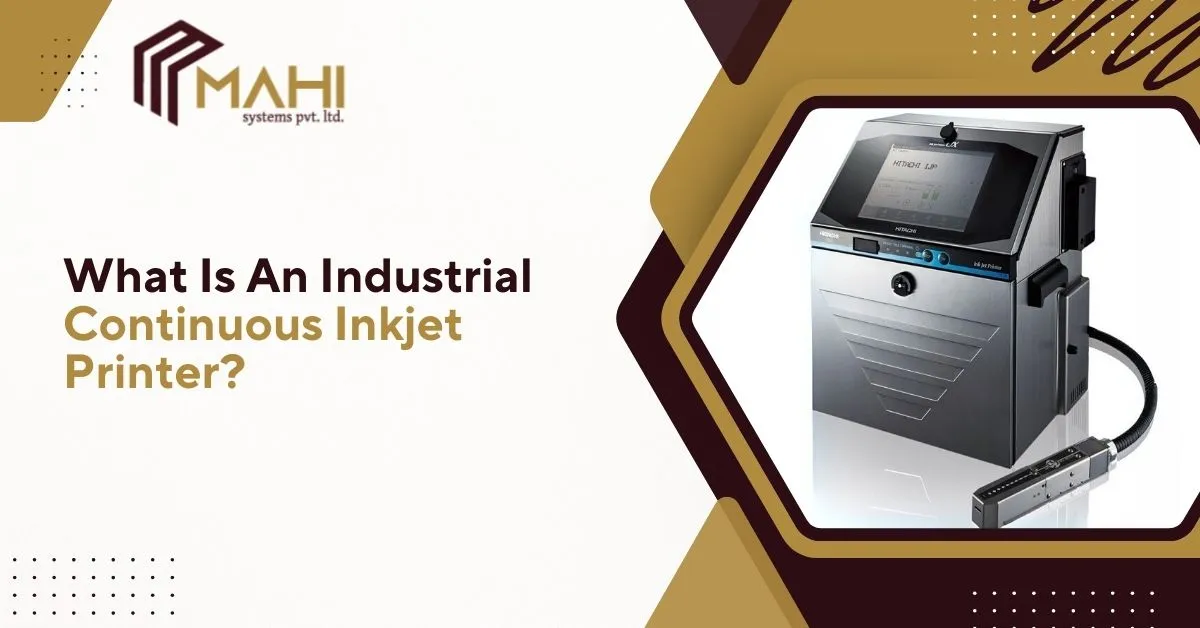
Hitachi CIJ Printers for Food & Beverage Industry are essential tools for modern manufacturers who need fast, accurate, and reliable printing on product packaging. In today’s food and beverage market, printing batch numbers, expiry dates, barcodes, and logos is not just a requirement—it ensures safety, compliance, and brand trust.
Mahi Systems Pvt. Ltd. provides a wide range of Hitachi CIJ printers that can print on bottles, cans, cartons, and flexible packaging. These printers are designed to keep production lines running smoothly while maintaining high-quality, clear, and durable prints on all types of packaging.
Why CIJ Printers are Essential in Food & Beverage Manufacturing?
Continuous Inkjet technology is designed for high-speed, non-contact printing, making it ideal for the food and beverage sector. Here’s why:
- Non-Contact Printing: CIJ printers don’t touch the surface of the packaging, preventing contamination and preserving the integrity of products.
- Regulatory Compliance: Food safety regulations demand accurate and readable codes for traceability, and CIJ printers meet these standards with FDA-approved and EU-compliant inks.
- High-Speed Production: From bottling lines to carton packaging, CIJ printers maintain consistent printing speeds without sacrificing clarity.
- Versatility: CIJ printers can print on a variety of surfaces, including glass, plastic, metal, and cardboard, making them suitable for all F&B products.
Features of Hitachi CIJ Printers for Food & Beverage Industry
When investing in industrial inkjet printers, manufacturers must consider durability, efficiency, and flexibility. Hitachi CIJ printers are designed with these factors in mind:
1. Food-Grade Ink Options
- Hitachi provides certified food-grade inks that are safe for packaging that may come into contact with consumables.
- Solvent-based and oil-based inks are available, ensuring adherence to safety standards.
2. Robust Build for Industrial Environments
- IP65-rated printers withstand washdowns, dust, and humidity—essential for food processing areas.
- Stainless steel printheads resist corrosion, ensuring long-term reliability.
3. Easy Maintenance & Consumables Management
- Smart cartridge systems minimize spillage and simplify fluid replacement.
- Self-cleaning nozzles reduce downtime and keep print quality consistent.
4. Flexible Coding Options
- Print expiry dates, batch numbers, barcodes, QR codes, and logos with customizable heights and orientations.
- Supports multiple message storage for dynamic production requirements.
5. Speed vs Accuracy
- High-speed printing capabilities ensure that even fast-moving bottles, cans, and cartons receive precise codes without smudging or blurring.
Hitachi CIJ Printer Models for Food & Beverage
1. Hitachi UX-B160W
- Compact design for small lines.
- Print capacity: up to 240 characters.
- High-resolution printing ensures clear batch codes and expiry dates.
2. Hitachi UX-D150W
- High-speed printing suitable for beverage lines.
- Print capacity: up to 1000 characters.
- Can handle curved or irregular packaging surfaces.
3. Hitachi UX-D160WG
- Designed for flexible packaging and cartons.
- Supports logos, barcodes, and text simultaneously.
- Optimized for high-throughput production lines.
4. Hitachi UX-D860W
- Industrial-grade reliability for large-scale F&B operations.
- Print capacity: up to 1000 characters.
- Ideal for multi-line coding on primary and secondary packaging.
5. Hitachi UX-P160W
- Offers versatile message storage.
- High-speed operation: up to 2083 characters/sec.
- Supports ink options for diverse materials including glass, metal, and plastic.
We assist in choosing the right Hitachi model for your specific line, ensuring optimal productivity and compliance.
Looking for reliable Hitachi CIJ Printers for your food and beverage production? Contact us today for expert guidance and solutions.
Industries Leveraging Hitachi CIJ Printers
Hitachi CIJ printers serve a wide array of F&B manufacturers:
- Beverage Industry: Bottling lines, juice cartons, and soft drink cans.
- Dairy Products: Milk cartons, yogurt cups, cheese packaging.
- Snack Foods & Confectionery: Boxes, wrappers, and flexible packs.
- Frozen Foods: Durable codes that withstand cold storage.
- Pharmaceutical-Grade Food & Nutraceuticals: Supplements and health foods requiring strict traceability.
Best Practices for Using CIJ Printers in Food & Beverage
- Use Certified Inks: Always use food-grade, compliant inks to meet regulatory standards.
- Environmental Control: Maintain consistent temperature and humidity to ensure optimal print quality.
- Routine Maintenance: Regular nozzle cleaning, cartridge replacement, and system calibration prevent downtime.
- Integration with Packaging Lines: Proper alignment ensures accurate placement on curved, uneven, or flexible surfaces.
Benefits of Using Hitachi CIJ Printers
- Reduced Waste: Fewer misprints and error-free coding reduces material waste.
- Compliance Assurance: Clear, durable codes ensure adherence to food safety standards.
- Improved Efficiency: High-speed printing reduces bottlenecks in production lines.
- Cost Savings: Smart fluid systems and low-maintenance components lower operational costs.
- Brand Protection: Legible, consistent codes enhance consumer trust and brand credibility.
Frequently Asked Questions
Yes, when using certified food-grade inks, Hitachi CIJ printers meet all FDA and EU compliance standards.
Absolutely. Models like UX-D150W and UX-D160WG are designed for both flat and irregular surfaces.
Daily printhead cleaning, cartridge checks, and periodic calibration are recommended for optimal performance.
High-speed models like UX-D860W can print thousands of characters per second while maintaining clarity.
Conclusion
Hitachi CIJ printers are indispensable for the food and beverage industry, combining speed, precision, and compliance to meet the rigorous demands of modern production lines. Choosing the right printer ensures operational efficiency, cost savings, and high-quality output, making it a long-term investment in your manufacturing success.
Related Posts