Industrial product identification is critical for traceability, compliance, and brand protection. From expiry dates to…
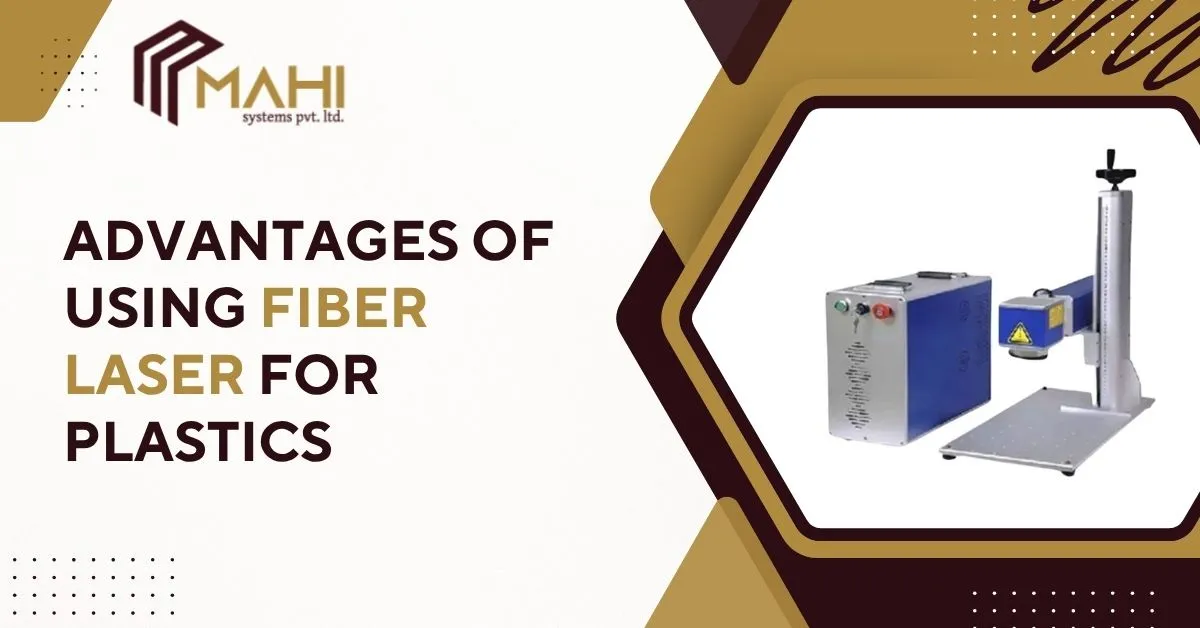
Plastics dominate modern manufacturing, and industries need fast, permanent, and reliable marking solutions to maintain quality and traceability, which is why a Fiber Laser Marking Machine sits at the center of today’s industrial marking revolution and offers unparalleled efficiency and long-term reliability for high-volume operations.
What Is a Fiber Laser?
A fiber laser is a highly advanced solid-state laser that uses rare-earth doped optical fiber as the laser medium, producing stable, high-quality beams favored for precision marking, and this advanced beam quality becomes even more beneficial when a Fiber Laser Marking Machine is used to deliver consistent results across various plastic surfaces in industrial environments.
A fiber laser generates a wavelength ideal for light absorption in many engineering plastics, ensuring controlled interaction with the material, and this optimized energy delivery shows why a Fiber Laser Marking Machine is so effective for applications requiring long-lasting, detailed, and readable marks without damaging material surfaces.
High Precision and Clean Edges
Precision is one of the biggest strengths of fiber laser systems, as they can engrave ultra-fine details, microcodes, and sharp edges with minimal heat distortion, which becomes especially valuable when a Fiber Laser Marking Machine is used to create smooth, flawless markings on plastic components where clarity and accuracy are essential. Many manufacturers require precise labeling systems that meet regulatory standards, and fiber lasers deliver consistent output every time, ensuring that production runs remain uniform while relying on a Fiber Laser Marking Machine to maintain quality control without sacrificing speed, detail, or clarity under demanding workloads.
Faster Marking Speeds
Fiber lasers are renowned for their high-speed marking capabilities, enabling faster production cycles and reducing bottlenecks, and these benefits scale even further when a Fiber Laser Marking Machine is deployed in automated lines where thousands of plastic components require marking within minutes.
Fast marking speeds make fiber lasers perfect for industries such as packaging, automotive, and electronics, where time efficiency plays a critical role, and by integrating a Fiber Laser Marking Machine into their workflow, manufacturers gain the ability to maintain rapid operations while still achieving high-resolution marks on every piece.
Superior Durability and Low Maintenance
Fiber lasers use solid-state technology that has no moving parts, enabling them to operate for years with minimal wear and tear, making them a reliable choice for continuous operations, and companies benefit significantly because a Fiber Laser Marking Machine ensures dependable performance with fewer service interruptions and longer operational readiness.
The inherent durability reduces the cost of repairs and replacement parts, helping businesses lower their long-term operating expenses, and manufacturers who rely on a Fiber Laser Marking Machine can enjoy consistent uptime and uninterrupted production, contributing to smoother workflows and reliable marking consistency for years.
Energy Efficiency and Lower Operating Costs
Fiber lasers convert electrical energy into optical energy at high efficiency rates, lowering power usage and reducing operational costs, and this energy-saving advantage becomes even more compelling when a Fiber Laser Marking Machine operates round-the-clock in large-scale production environments where every watt counts.
Lower energy consumption not only decreases utility bills but also aligns with sustainable manufacturing goals, and businesses aiming to reduce carbon footprints can rely on a Fiber Laser Marking Machine to support eco-friendly operations without sacrificing performance, precision, or throughput.
Want to improve production efficiency with precision fiber laser marking?
Contact us to discuss your requirements and get customized recommendations.
High-Contrast Permanent Marking on Plastics
Fiber lasers create permanent marks that resist abrasion, chemicals, and environmental exposure, offering superior longevity in both indoor and outdoor conditions, and these permanent results make a Fiber Laser Marking Machine essential for industries requiring long-lasting traceability such as medical devices, automotive components, and industrial labeling.
High-contrast marks ensure readability even after years of use, making them ideal for safety labels, compliance information, and product identification, and manufacturers value that a Fiber Laser Marking Machine consistently produces sharp markings that remain clear despite exposure to heat, friction, or cleaning agents.
Compatibility With a Wide Range of Plastics
Fiber lasers work effectively with various plastics like ABS, PVC, PET, Polycarbonate, and Acrylic, producing clean, sharp marks on each material type, and this versatility is a key advantage when a Fiber Laser Marking Machine must handle multiple plastic components within the same production facility.
Differences in plastic composition require precise adjustments to achieve high-contrast results, and the flexibility of a Fiber Laser Marking Machine allows manufacturers to fine-tune parameters for each material, ensuring reliable performance whether the surface is glossy, textured, transparent, or pigmented.
Real-World Applications of Fiber Laser on Plastics
Fiber laser plastic marking is widely used in sectors like automotive, electronics, medical devices, consumer products, and industrial machinery, where permanent identification is critical, and industries benefit greatly because a Fiber Laser Marking Machine delivers durable, high-quality markings that withstand rigorous use across all these applications.
Companies often rely on fiber lasers to mark logos, compliance labels, serial numbers, QR codes, and safety instructions, and integrating a Fiber Laser Marking Machine helps organizations improve traceability, reduce counterfeit risks, and meet global labeling standards without sacrificing productivity or accuracy.
Fiber Laser vs CO₂ vs UV Laser for Plastics
| Feature | Fiber Laser | CO₂ Laser | UV Laser |
| Precision | Very High | Moderate | Extremely High |
| Speed | Fast | Medium | Medium–Fast |
| Material Compatibility | Engineering plastics | Organic materials | Sensitive plastics |
| Heat Effect | Low | Medium | Very Low |
| Maintenance | Low | Medium | Medium |
| Durability | Excellent | Good | Good |
| Best Use Cases | Marking plastics | Cutting organic materials | Micro-marking |
How to Choose the Right Fiber Laser for Plastic Marking
Selecting the right laser involves evaluating power levels, marking speed, lens size, automation features, and software capabilities, and businesses making these decisions often rely on a Fiber Laser Marking Machine to deliver strong performance, adaptability, and integration options suited to their production environment.
Material testing is essential because different plastics react differently to laser wavelengths, and companies achieve optimal results by calibrating the Fiber Laser Marking Machine to their exact product specifications, ensuring consistent clarity, contrast, and durability across every production batch.
Common Concerns & Best Practices
Manufacturers often worry about melting, discoloration, or surface burn marks, but these concerns can be easily managed with proper laser parameter adjustments, and users who operate a Fiber Laser Marking Machine benefit from fine control over power, frequency, and speed to eliminate defects and improve marking quality.
Routine testing and calibration should be performed to maintain consistent results, and production teams can rely on a Fiber Laser Marking Machine to handle continuous workloads while delivering stable, accurate, and repeatable marks that meet quality assurance standards across global markets.
Frequently Asked Questions
Fiber lasers offer high precision, fast speeds, low maintenance, and permanent high-contrast marking, and manufacturers using a Fiber Laser Marking Machine can achieve reliable, durable results on various plastic materials.
Most plastics including ABS, PC, PET, and PVC can be marked effectively, and performance improves greatly when a Fiber Laser Marking Machine is tuned to match the specific properties of each material.
Yes, fiber laser marks resist heat, chemicals, and abrasion, and durability increases when a Fiber Laser Marking Machine delivers controlled, high-precision marking energy to the plastic surface.
Fiber lasers deliver higher precision, lower maintenance, and better energy efficiency, and companies prefer using a Fiber Laser Marking Machine for detailed, permanent markings rather than using CO₂ lasers which are better suited for cutting.
No—when parameters are correctly adjusted, fiber lasers avoid melting or burning, and operators of a Fiber Laser Marking Machine can fine-tune settings to ensure smooth, distortion-free markings on any plastic surface.
Conclusion
Fiber lasers provide unmatched precision, speed, durability, and energy efficiency for plastic marking, making them essential for modern manufacturing, and integrating a Fiber Laser Marking Machine allows industries to achieve flawless, permanent, and highly readable markings that enhance traceability, compliance, and product value across global markets.
Related Posts