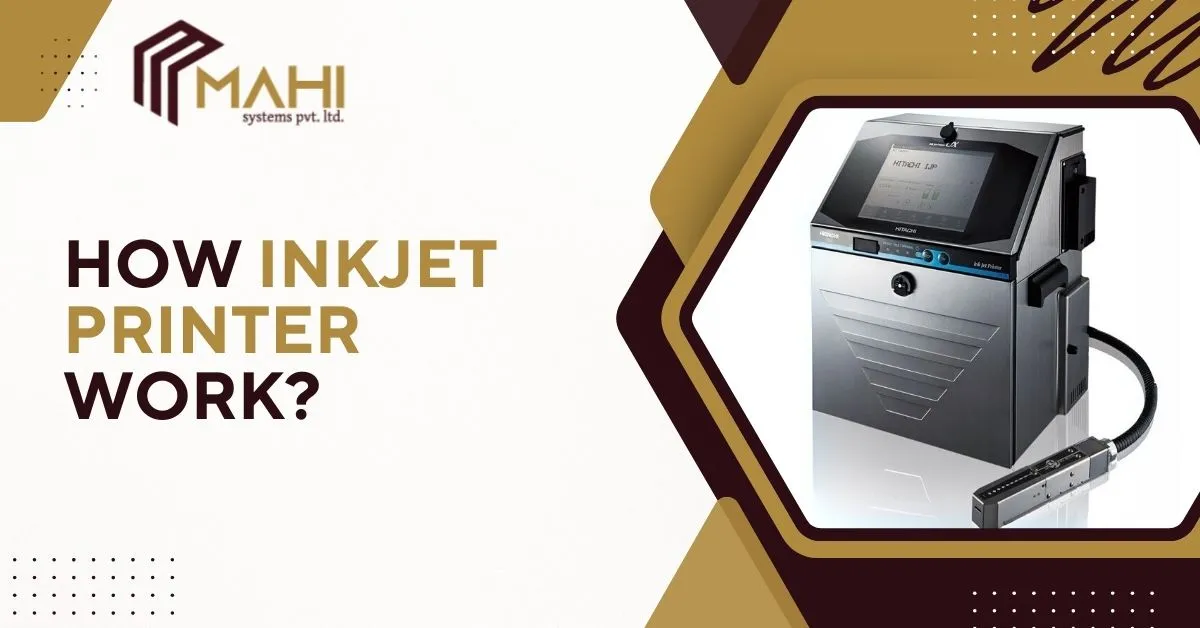
Inkjet printing is one of the most widely used printing technologies in both offices and…
Industrial packaging and manufacturing demand fast and reliable coding for traceability and compliance. From printing batch numbers to expiry dates, companies need a system that works non-stop with minimal errors. In high-speed production lines, the Continuous Inkjet Printer has become one of the most trusted solutions because it prints clearly on almost any material without touching the surface.
What Is Continuous Inkjet Printing Technology?
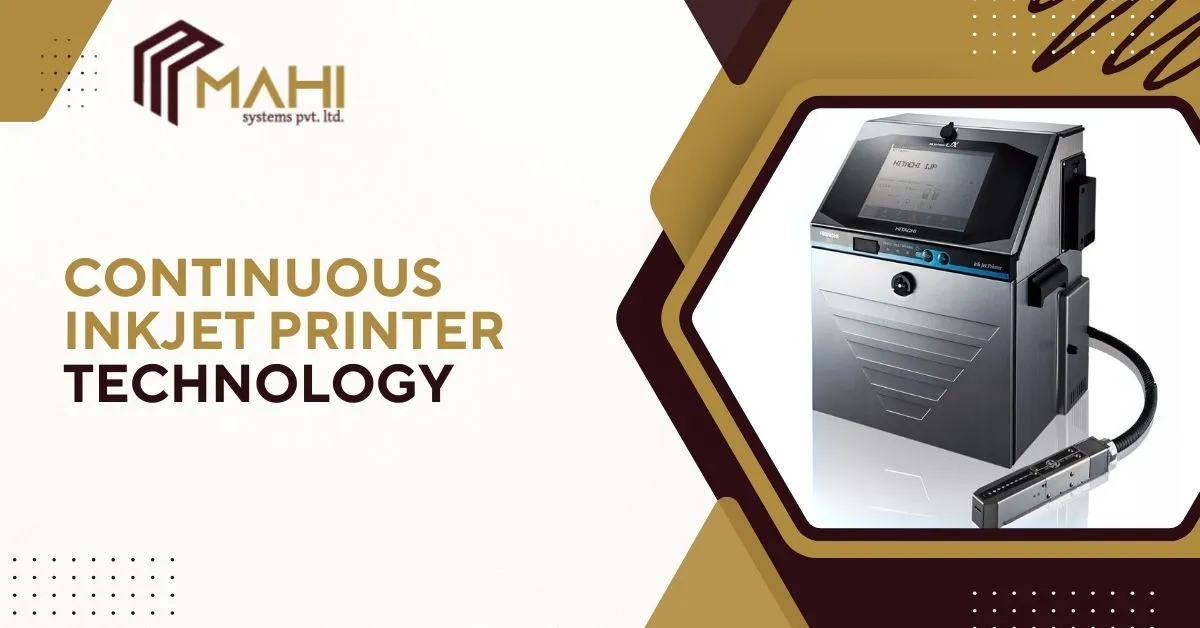
Continuous inkjet printing is an industrial marking method where ink flows continuously and forms tiny droplets for printing. Unlike normal inkjet printing, CIJ technology is designed for speed, non-contact operation, and long production cycles. At the core of this technology, the Continuous Inkjet Printer creates permanent codes such as dates, lot numbers, serial numbers, logos, barcodes, and QR codes even on curved or moving packaging.
Key highlights of CIJ technology:
- Continuous droplet generation for uninterrupted printing
- Non-contact marking on moving products
- High-speed coding on bottles, cans, films, and cartons
- Supports variable data printing like batch codes and expiry dates
Working Principle of Continuous Inkjet Printer
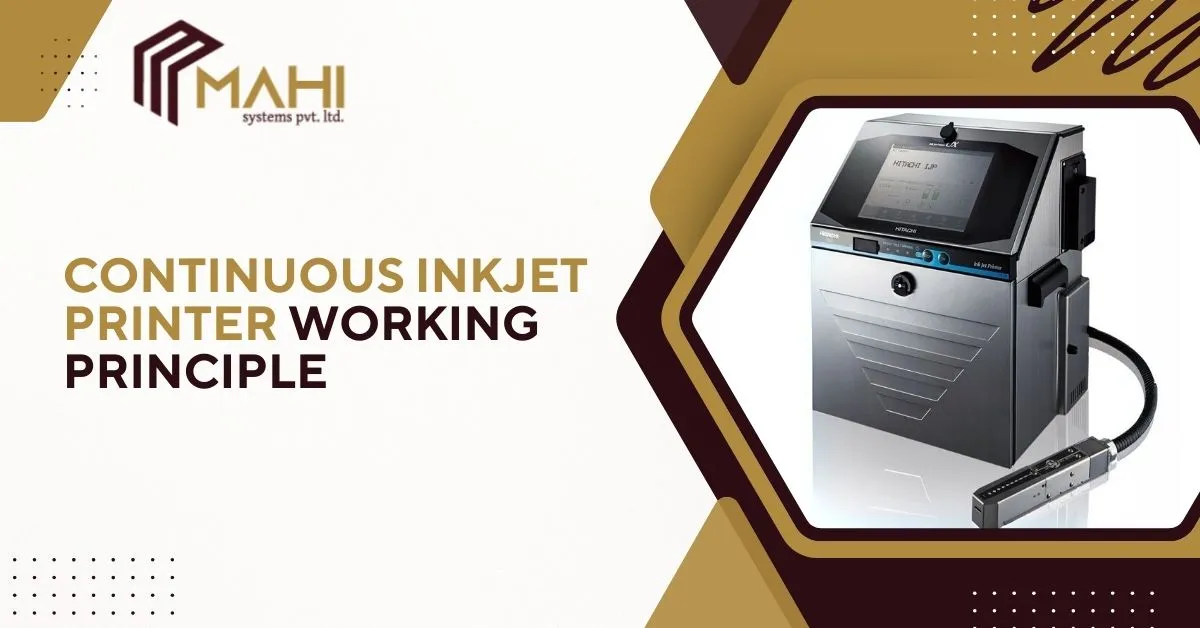
The working process of CIJ is based on forming a continuous stream of ink droplets and controlling them electrically. The printer breaks the ink stream into droplets, charges selected droplets, and directs them to form characters on the product. In the middle of this operation, the Continuous Inkjet Printer uses deflection plates to guide droplets accurately while unused ink droplets are recycled back into the system for continuous printing.
Step-by-step CIJ working process:
- Ink is pumped through a nozzle to create a continuous jet
- The jet is broken into fine droplets at high frequency
- Droplets receive electrical charge based on printing message
- Charged droplets are deflected toward the substrate
- Unused droplets are collected and recirculated
- The code appears instantly as the product moves on the line
This is why CIJ printers are trusted for continuous production environments where downtime impacts productivity.
Key Components of a CIJ Printing System
CIJ printing systems include several precision parts that work together to ensure stable performance and consistent marking quality. Components include the nozzle, print head, ink tank, pump, filters, charging electrode, gutter system, controller, and solvent/makeup unit. In advanced industrial setups, the Continuous Inkjet Printer is built to operate continuously with ink recirculation and automatic cleaning to reduce maintenance time.
Print head & nozzle
This is the main printing unit that creates a fine, continuous ink stream. The nozzle is designed to produce microscopic ink droplets at high speed, ensuring smooth and uninterrupted printing even in demanding industrial environments.
Ink tank & recirculation unit
Stores the ink and continuously circulates it through the system to maintain stable ink flow. This unit helps control ink viscosity, prevents ink settling, and ensures the printer delivers consistent print quality during long production shifts.
Charging electrode
Applies an electrical charge to selected droplets based on the required message pattern. This charging process is highly accurate, allowing the printer to decide which droplets will be used for printing and which will be recycled.
Deflection plates
These plates use electrostatic force to guide charged ink droplets toward the surface to form precise characters. This component plays a major role in ensuring sharp text, readable barcodes, and clear variable data on moving products.
Gutter system
Collects unused or non-printed droplets and returns them back into the ink system. This recycling method is what makes CIJ technology highly efficient and ideal for continuous production lines, minimizing ink wastage.
Filters & pumps
Ensure ink is clean, free from particles, and flowing at the correct pressure. Filters prevent clogging, while pumps maintain steady ink circulation, which supports stable performance and long machine life.
Controller & software
The intelligent control system that manages printing parameters such as speed, font, message layout, barcode/QR code design, and variable data printing. It also supports automation integration with sensors, PLC systems, and conveyor controls.
Makeup / solvent system
Helps regulate ink thickness and drying speed by adding makeup fluid (solvent) whenever needed. This maintains correct viscosity, prevents print defects, and ensures the ink dries quickly on substrates like plastic, glass, metal, or flexible packaging films.
These components allow Continuous Inkjet Printer to run continuously without frequent stoppage.
CIJ Technology vs Other Marking Technologies
Many industries compare CIJ technologies with other popular technologies like Thermal Inkjet (TIJ), Laser Marking, TTO printing, and DOD printing systems. Each method has its own strengths, but CIJ remains the best option for fast lines and non-contact coding. For high-speed production and multi-surface printing, the Continuous Inkjet Printer is preferred because it performs reliably on uneven surfaces like bottles, cables, cans, and pouches.
Continuous Inkjet Printer vs Other Coding Technologies
| Technology | Best For | Speed | Consumables | Marking Type |
| Continuous Inkjet Printer (CIJ) | Bottles, cans, fast lines | Very High | Ink + solvent | Non-contact |
| Thermal Inkjet (TIJ) | Cartons, labels | Medium-High | Ink cartridge | High resolution |
| Laser Marking | Permanent engraving | High | None | No ink |
| TTO Printer | Flexible films | High | Ribbon | Film printing |
Benefits of Continuous Inkjet Printing Technology
Continuous inkjet printing offers several benefits that make it a leading coding solution in manufacturing. It supports high-speed printing, works on different materials, runs continuously, and produces readable codes even in challenging environments. For companies focused on productivity and uptime, the Continuous Inkjet Printer reduces downtime and improves efficiency because it prints without contact, dries quickly, and integrates easily into automated packaging lines.
Industrial Applications
CIJ printing is used across industries where accurate coding is essential for packaging and compliance. These industries include food and beverage, pharmaceuticals, FMCG, chemicals, electronics, and automotive manufacturing. In modern traceability systems, the Continuous Inkjet Printer is used to print batch codes, expiry dates, serial numbers, and QR codes that help products meet industry regulations and customer safety requirements.
What Can CIJ Printers Print?
CIJ printers can handle simple to complex marking depending on production needs and printer configuration. They print expiry dates, manufacturing dates, batch numbers, lot codes, logos, barcodes, QR codes, and Data Matrix codes. To handle variable data printing at high speeds, the Continuous Inkjet Printer is highly effective because it supports real-time code changes without slowing the production line.
How to Choose the Right CIJ Printer?
Choosing the right CIJ printer requires understanding your production line needs and the substrate you print on. Line speed, ink type, print distance, environment conditions, and automation compatibility are important considerations. To avoid coding errors and breakdowns, the Continuous Inkjet Printer should be selected based on your industry requirements, compliance needs, and the type of packaging you use.
Need the right Continuous Inkjet Printer for your production line?
Contact us today for expert guidance and best coding solutions.
Maintenance Tips for Better Performance
Routine maintenance ensures stable print quality, longer machine life, and reduced downtime. Daily nozzle checks, proper filter replacement, correct ink usage, and regular cleaning help maintain performance. In the center of long-term reliability, the Continuous Inkjet Printer benefits greatly from preventive maintenance because it prevents clogging, maintains ink viscosity, and ensures consistent coding quality on every product.
Future Trends in CIJ Printing Technology
The future of CIJ technology is becoming smarter and more connected with Industry 4.0 innovations. Remote monitoring, predictive maintenance alerts, eco-friendly inks, and automated settings optimization are transforming modern CIJ printing systems. As manufacturers focus on efficiency and sustainability, the Continuous Inkjet Printer will continue evolving to reduce solvent use, improve ink efficiency, and deliver better integration with smart factory environments.
Frequently Asked Questions
It is an industrial marking method where ink droplets are generated continuously and controlled to print codes on products and packaging.
A Continuous Inkjet Printer breaks an ink stream into droplets, charges selected droplets, and prints them using electrostatic deflection.
CIJ printers can mark bottles, cans, cartons, flexible packaging films, wires, pipes, and many other industrial materials.
Yes, CIJ printers can print 1D barcodes, QR codes, and DataMatrix codes for traceability and compliance.
CIJ is better for high-speed lines and curved surfaces, while TIJ works best for high-resolution coding on cartons and labels.
Yes, CIJ printers use ink and makeup solvent to maintain correct viscosity for continuous operation.
Conclusion
Continuous Inkjet Printing Technology remains one of the best industrial solutions for fast and reliable coding. With high-speed performance, substrate flexibility, non-contact printing, and continuous operation, the Continuous Inkjet Printer supports modern packaging and production environments. By choosing the right CIJ model, using correct inks, and following routine maintenance, manufacturers can achieve consistent coding quality, regulatory compliance, better traceability, and improved production efficiency.
Related Posts