Modern printing technologies often create confusion, especially when it comes to ink usage. One of…
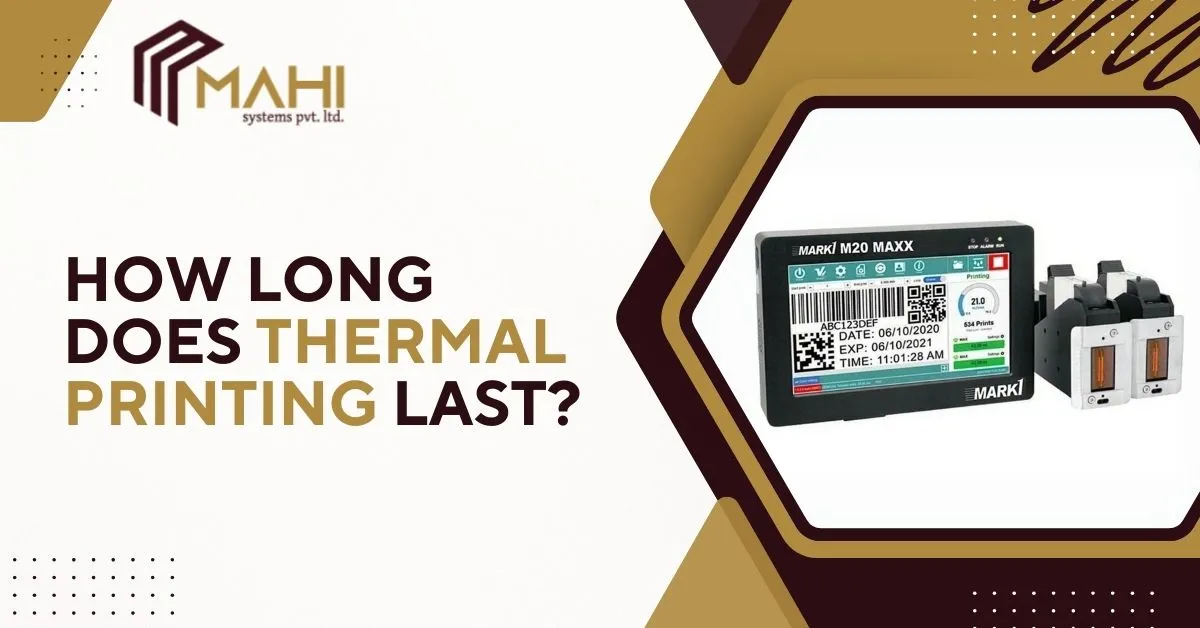
The lifespan of thermal printing depends on the type of thermal method used. With direct thermal printing, the printed image typically lasts 6 months to 2 years, depending on storage conditions. When using thermal transfer, prints can last 5 to 10 years or more. In the middle of long-term labeling needs, Thermal Inkjet Printers and thermal transfer methods offer better durability compared to basic direct thermal prints.
What Is Thermal Printing?
Thermal Inkjet Printers and thermal printers use heat to create images or text on paper or labels. In direct thermal printing, heat reacts with specially coated paper to produce the print, while thermal transfer uses heat to transfer ink from a ribbon onto the surface. At the center of this process, Thermal Inkjet Printers are often used for high-resolution coding and marking where durability and clarity are important.
- Thermal printing uses heat to create text or images on paper or labels
- Two main thermal printing methods are used:
-
- Direct thermal printing – heat reacts with coated paper
- Thermal transfer printing – heat transfers ink from a ribbon
- At the center of high-resolution coding, Thermal Inkjet Printers are widely used
- Ideal for applications requiring durability, clarity, and precision
Factors That Affect Print Longevity
Several factors influence how long thermal prints remain readable. Exposure to heat, sunlight, moisture, and friction can cause fading over time. Paper quality, ribbon type, and printer settings also play a major role. At the center of print stability, Thermal Inkjet Printers benefit from high-quality inks and controlled printing parameters that help maintain sharp and legible marks for longer durations.
- Exposure to high temperatures
- Direct sunlight and UV radiation
- Moisture and humidity
- Friction and frequent handling
- Paper or label material quality
- Ribbon and ink formulation
- Printer settings and heat intensity
Direct Thermal vs Thermal Transfer Durability
Direct thermal printing does not use ink or ribbon, making it cost-effective but less durable. Thermal transfer printing uses a ribbon that bonds ink to the label surface, resulting in much longer print life. When durability is critical, businesses often rely on Thermal Inkjet Printers or thermal transfer printers to achieve long-lasting, smudge-resistant results suitable for storage and transportation environments.
Direct Thermal Printing
- Does not use ink or ribbon
- Cost-effective solution
- Shorter print lifespan
- Best for receipts and short-term labels
Thermal Transfer Printing
- Uses ink ribbon
- Ink bonds permanently to the surface
- Longer-lasting and smudge-resistant
- Ideal for storage and transportation
Print Longevity
| Printing Method | Average Print Life | Best Use Case |
| Direct Thermal | 6 months – 2 years | Receipts, short-term labels |
| Thermal Transfer | 5 – 10+ years | Product labels, logistics |
| Thermal Inkjet Printing | 2 – 5+ years | Packaging, coding, branding |
This table shows why Thermal Inkjet Printers are preferred when moderate to long-term print durability is required.
How to Extend Thermal Print Life?
To increase print longevity, store printed materials away from heat and sunlight, use protective coatings or laminates, and select the correct paper or label material. In the center of quality output, Thermal Inkjet Printers perform best when paired with compatible inks and substrates designed for long-term readability.
Industrial and Commercial Applications
Thermal printing is widely used for receipts, shipping labels, barcodes, batch codes, and product packaging. In many industries, Thermal Inkjet Printers are chosen because they provide cleaner prints, better contrast, and longer readability than basic thermal methods, making them ideal for FMCG, pharma, electronics, and logistics sectors.
- Retail receipts and invoices
- Shipping and logistics labels
- Barcodes and QR codes
- Batch codes and expiry dates
- Product packaging and branding
Impact of Storage Conditions on Print Longevity
Print lifespan is not only influenced by printing technology but also by how printed materials are stored. When labels or documents printed using Thermal Inkjet Printers are kept in cool, dry, and dark environments, the print remains legible for a much longer time. Excessive heat, humidity, or direct sunlight can accelerate fading, especially on thermal media. Proper storage practices significantly improve print durability.
- Cool environments slow down fading
- Dry conditions prevent moisture damage
- Dark storage reduces UV exposure
Want longer-lasting prints from your thermal printer?
Get expert guidance—contact us today.
Role of Ink Quality in Print Durability
Ink formulation plays a critical role in how long prints last. High-quality inks used in Thermal Inkjet Printers are designed to resist smudging, moisture, and light exposure. Pigment-based inks generally offer better longevity than dye-based inks, making them suitable for long-term labeling, packaging, and traceability applications where durability is essential.
- High-quality inks resist smudging
- Improved resistance to moisture and light
- Pigment-based inks last longer than dye-based inks
Print Longevity on Different Surfaces
The surface material greatly affects print lifespan. Labels printed on coated paper, synthetic labels, or industrial packaging films using Thermal Inkjet Printers last longer compared to uncoated or low-quality substrates. Smooth, compatible surfaces allow better ink adhesion, resulting in sharper prints and extended readability over time.
Effect of Handling and Abrasion
Frequent handling, rubbing, or friction can reduce print life. Even though Thermal Inkjet Printers produce high-resolution prints, excessive abrasion on labels or cartons can cause gradual fading. Using protective coatings or laminations can help preserve print quality in high-contact environments such as logistics and warehousing.
- Frequent handling causes gradual fading
- Rubbing and friction reduce print clarity
- Protective coatings extend readability
Choosing the Right Printing Method for Longevity
When comparing direct thermal, thermal transfer, and inkjet methods, Thermal Inkjet Printers often provide better longevity than direct thermal printing, especially when high-quality ink and substrates are used. For applications requiring medium- to long-term readability, thermal inkjet printing is a more reliable choice than heat-sensitive thermal paper.
Frequently Asked Questions
Direct thermal prints usually last between 6 months and 2 years, depending on heat and light exposure.
Yes, thermal transfer prints can last over 5 to 10 years with proper ribbon and label materials.
Yes, Thermal Inkjet Printers generally produce longer-lasting prints with better resistance to fading.
Heat, UV light, moisture, and friction are the main reasons thermal prints fade over time.
Thermal transfer and Thermal Inkjet Printers are best for applications requiring long-term durability.
Conclusion
The lifespan of thermal printing depends on the printing method, materials used, and environmental conditions. Direct thermal prints are suitable for short-term use, while thermal transfer and Thermal Inkjet Printers offer much longer durability. By selecting the right technology and proper storage practices, businesses can ensure readable, reliable prints that meet their operational and compliance needs.
Related Posts