Industrial product identification is critical for traceability, compliance, and brand protection. From expiry dates to…
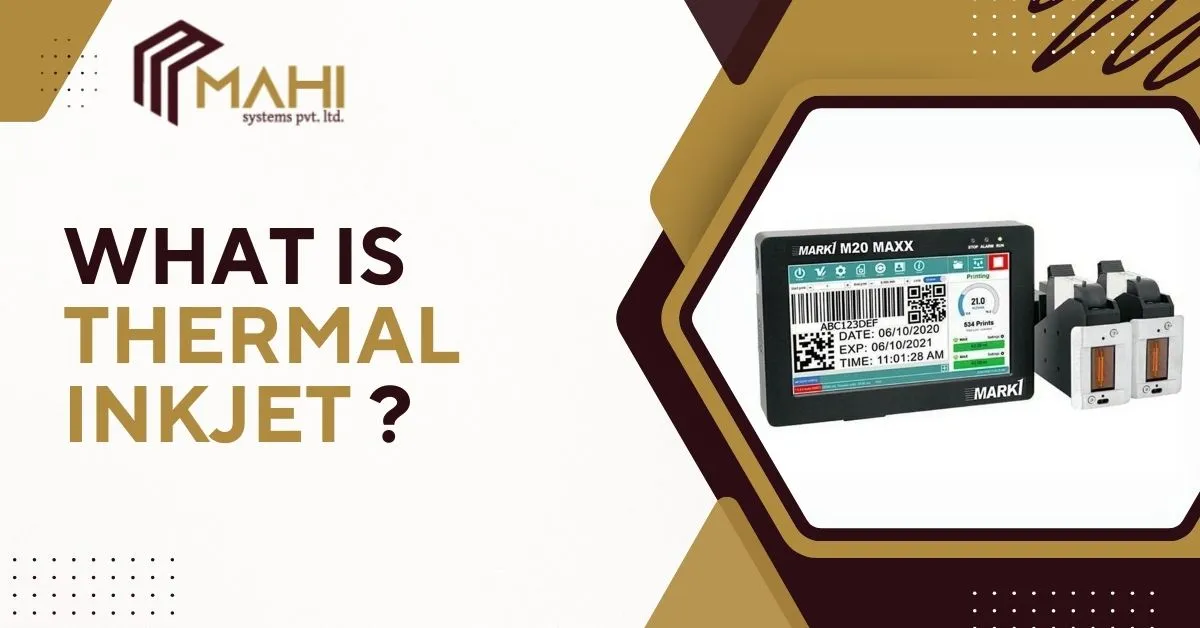
Thermal inkjet (TIJ) is a printing technology that sprays tiny ink droplets onto a surface to create clear, readable codes. In the middle of the process, Thermal Inkjet Printers use controlled heat inside the cartridge to form micro-bubbles that push ink through microscopic nozzles. Because TIJ is cartridge-based, it’s known for clean operation, simple maintenance, and fast replacement—ideal for factories that want reliable coding without complex servicing.
How Thermal Inkjet Works
Thermal inkjet printing works through a fast, repeatable cycle. At the center of this cycle, Thermal Inkjet Printers heat a tiny resistor, which creates a vapor bubble that forces a droplet of ink out of the nozzle onto the product surface. This happens thousands of times per second, building characters, barcodes, or QR codes line by line. The printer controller adjusts droplet timing and density to maintain print clarity even at production speeds.
Key Components of a TIJ Printer
A TIJ system is built for simplicity. In day-to-day operation, Thermal Inkjet Printers mainly rely on a print cartridge (ink + nozzle plate), a controller, sensors/encoder for speed tracking, and a mounting bracket for line integration. The cartridge is a major advantage because replacing it refreshes the nozzles too, reducing clog risk and lowering maintenance compared to many other coding systems. Ink selection matters—water-based inks are common for porous surfaces, while solvent-based inks perform better on non-porous materials.
TIJ vs CIJ vs TTO
Choosing the right coding technology depends on your packaging material, speed, and print requirements. In the center of this decision, Thermal Inkjet Printers stand out for sharp, high-DPI prints on cartons, labels, and secondary packaging. CIJ often wins on very high-speed primary packaging and uneven surfaces, while TTO is excellent for flexible films where ribbons produce very dark, crisp prints.
| Feature | TIJ (Thermal Inkjet) | CIJ (Continuous Inkjet) | TTO (Thermal Transfer Overprinter) |
| Best fit | Cartons, labels, boxes | Bottles, pouches, fast lines | Flexible films, pouches |
| Print quality | Very high | Good | Very high |
| Maintenance | Low | Medium–High | Medium |
| Consumables | Cartridge | Ink + makeup | Ribbon |
| Setup/cleanliness | Very clean | Can be messy | Clean |
Benefits of Thermal Inkjet Printing
Thermal inkjet offers strong operational benefits for manufacturers. In the middle of production, Thermal Inkjet Printers help reduce downtime because cartridges are quick to change and don’t require complicated fluid systems. TIJ also supports high-resolution printing for small text, QR codes, and detailed logos—useful for compliance and traceability. Many factories choose TIJ because it’s clean, operator-friendly, and delivers consistent code quality with minimal daily maintenance.
Applications & Industries
TIJ is widely used across industries that need clear, compliant coding. At the center of secondary packaging lines, Thermal Inkjet Printers are commonly used for batch number, MRP, manufacturing date, expiry date, barcodes, QR codes, and serialization. Typical industries include FMCG, pharmaceuticals, cosmetics, food & beverage, logistics, and corrugated carton packaging—especially where sharp readability matters for scanning and audits.
Need reliable, high-speed coding for packaging and labeling applications?
Contact us to explore advanced thermal inkjet printer solutions.
How to Choose the Right TIJ Printer
Selecting a TIJ printer becomes easier when you match it to your application. In the center of selection, Thermal Inkjet Printers should be evaluated by substrate type (porous/non-porous), required print height, DPI/print quality, production line speed, and integration needs. Also consider ink type (water-based vs solvent-based), drying time requirements, and whether your environment has dust, humidity, or temperature swings that could affect print performance.
Common Issues & Quick Fixes
Most TIJ issues are easy to resolve with simple checks. In typical troubleshooting, Thermal Inkjet Printers may show faded prints due to low ink levels, incorrect print distance, or wrong speed/encoder settings. Smudging usually indicates slow drying ink or a mismatch between ink type and substrate. If nozzles clog (less common with cartridge systems), replacing the cartridge often restores print quality immediately. Regular cleaning of the mounting area and correct alignment also prevent repeated errors.
Frequently Asked Questions
Thermal inkjet (TIJ) is a printing method that uses heat to eject ink droplets and create high-resolution codes on packaging surfaces.
They heat a tiny resistor to form a bubble that pushes ink through micro-nozzles, producing sharp text, barcodes, and QR codes.
TIJ is best for high-resolution printing on cartons and labels with low maintenance, while CIJ is often better for very high-speed primary packaging.
Yes, TIJ is known for high DPI output, making it excellent for QR codes, micro-text, and detailed logos.
With the right ink, TIJ can print on porous materials (cartons) and many non-porous surfaces (films, plastics, foils).
Typically no. TIJ mainly uses cartridges, which simplifies operation and reduces fluid-system maintenance.
Conclusion
Thermal inkjet is a smart solution for manufacturers that need clean, high-resolution, and reliable coding. When configured correctly, Thermal Inkjet Printers deliver sharp text, QR codes, and traceability marks with low maintenance and fast cartridge replacement. For cartons, labels, and secondary packaging lines, TIJ provides an excellent balance of print quality, ease of use, and operational efficiency.
Related Posts