Industrial product identification is critical for traceability, compliance, and brand protection. From expiry dates to…
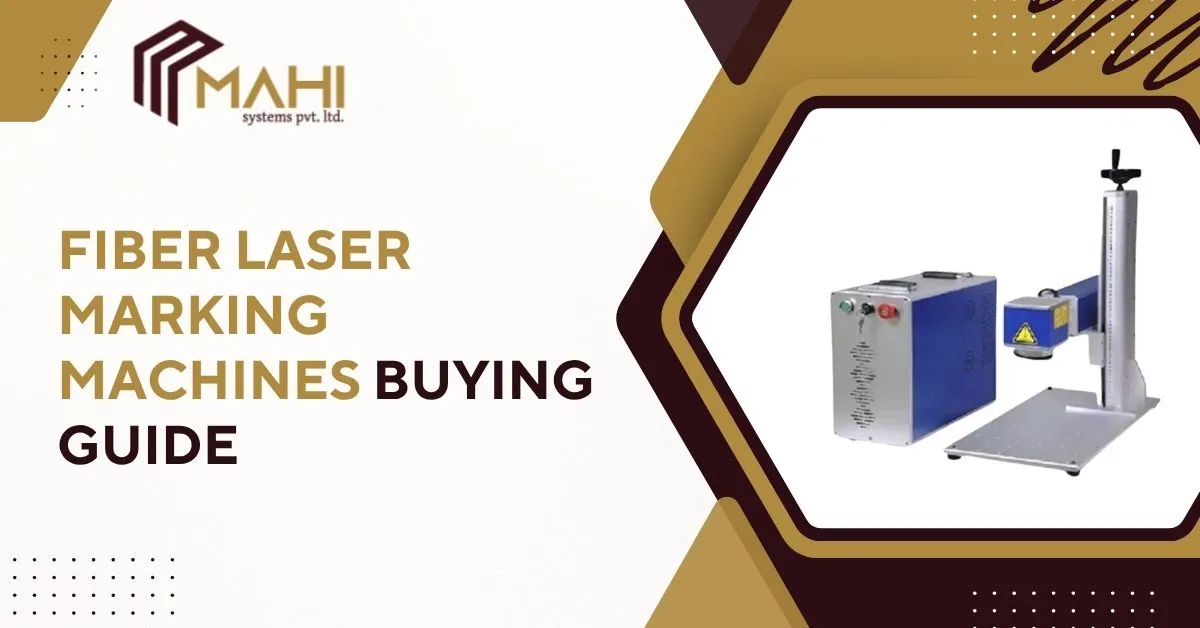
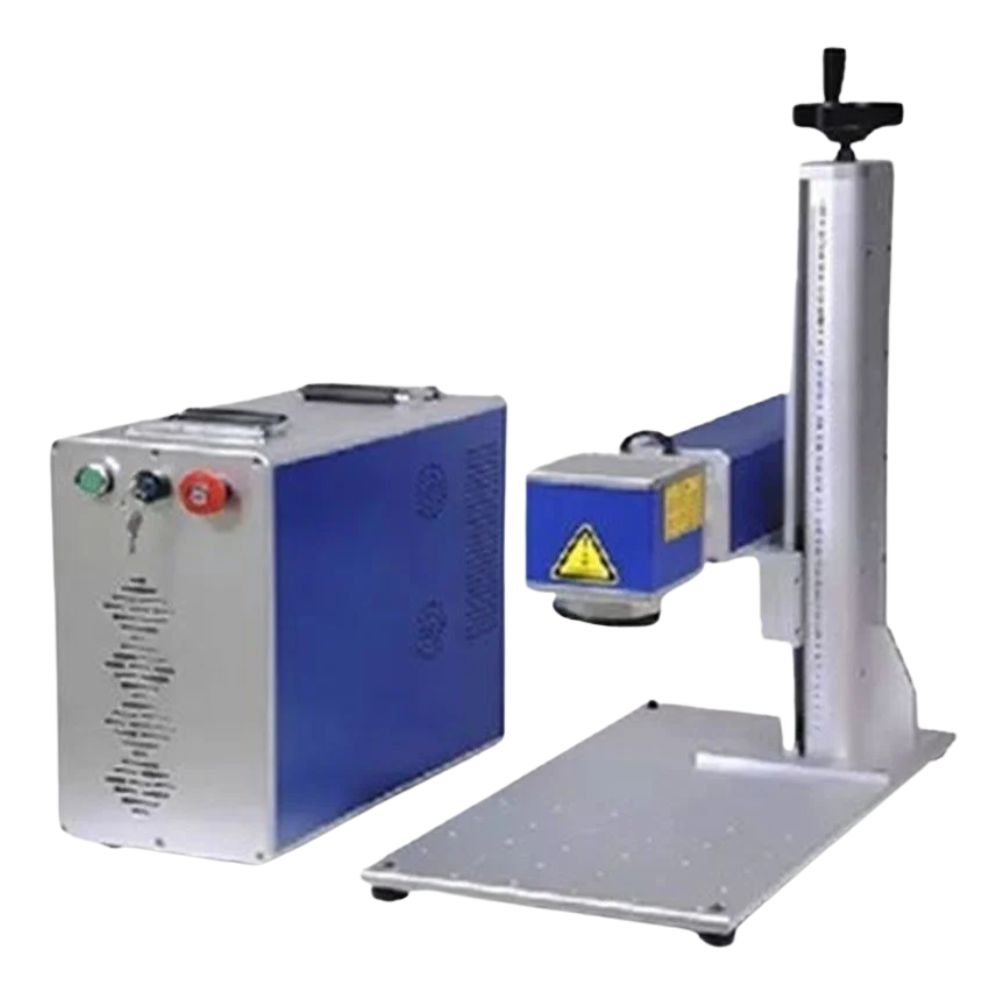
A fiber laser marking machine is an industrial laser system that permanently marks materials with high precision and speed. Fiber laser marking machines use a fiber laser source to generate a focused beam that alters the surface of a workpiece — creating text, logos, serial numbers, barcodes, QR codes, deep engravings, or subtle annealed marks. Compared to CO₂ and other laser types, fiber lasers are highly efficient for marking metals and many plastics, require less maintenance, and have long lifetimes. This guide explains how they work, who uses them, and how to choose the right model for your needs.
Why Choose a Fiber Laser Marking Machine?
A fiber laser marking machine for high precision, low maintenance, and fast marking on metals and plastics. Fiber lasers deliver compact, energy-efficient performance with excellent beam quality. They produce fine, repeatable marks at high speeds and typically have longer-lived laser sources (measured in tens of thousands of hours). For manufacturers, jewelers, medical device makers, automotive suppliers, and electronics shops, fiber lasers offer the best mix of speed, reliability, and low operating cost.
Key benefits
- High precision & resolution — crisp, readable text and small logos.
- Low maintenance — solid-state fiber sources need less upkeep than gas lasers.
- Fast marking speed — increases throughput and shortens cycle time.
- Material versatility — ideal for stainless steel, aluminum, titanium, copper (with MOPA), plastics, ceramics, and anodized surfaces.
- Long lifespan — fiber sources last far longer than many alternatives.
Types of Fiber Laser Marking Machines
Understand different fiber laser marking machine types so you can pick the right machine for your application.
| Model Name | Type / Application | Print Capacity | Character Speed | Best For | Key Features |
| Fiber ON FLY FJ 20 | On-Fly Fiber Laser Marker | Up to 200–300 characters | Up to 200–300/sec | Small to medium-scale marking | Compact, fast marking, ideal for metal and plastic parts |
| Fiber ON FLY FJ 30 | On-Fly Fiber Laser Marker | Up to 300 characters | Up to 300/sec | Industrial and jewelry engraving | Higher laser power, deep and clean marking |
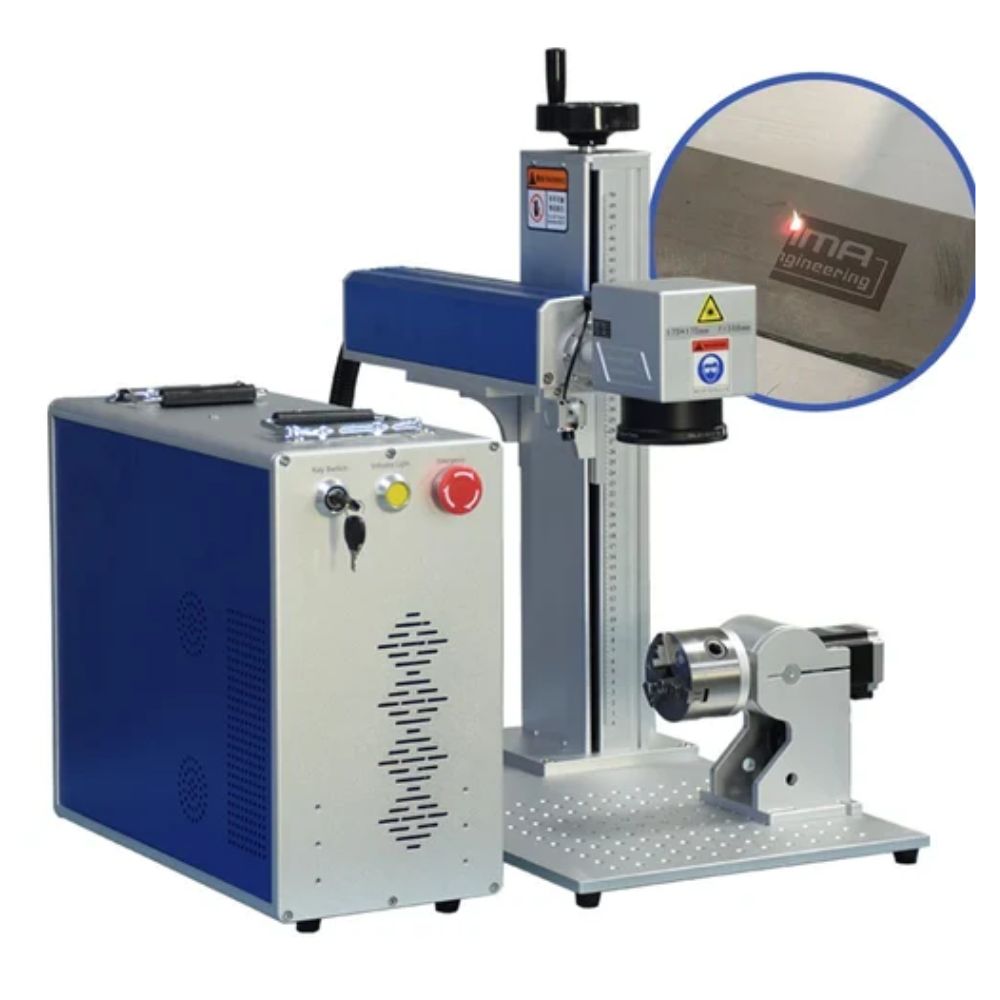
| Fiber TT FTJ 20 | Table-Top Fiber Laser Marker | Up to 1000 characters | Up to 16/sec | Jewelry and small workshops | Portable, easy to operate, high precision |
| Fiber TT FTJ 30 | Table-Top Fiber Laser Marker | Up to 500K characters | Up to 250/sec | High-volume jewelry and industrial production | Deep engraving, stable long-run performance |
Key Factors to Consider Before Buying
Evaluate laser power, marking speed, software compatibility, and cooling to match a fiber laser marking machine to your needs.
Laser Power (e.g., 20W, 30W, 50W, 100W)
- 20W–30W: Ideal for marking plastics, thin metals, and fine text — best for light-duty jobs.
- 50W: Sweet spot for many manufacturers — balances speed and depth for stainless steel and aluminum.
- 100W+: Use when you need deep engraving or very high throughput.
Choose the lowest power that reliably produces the marks you need — higher power increases cost and heat management needs.
Marking Speed & Precision
- Measured in mm/s or characters per second. Faster marking increases throughput but may reduce depth if power is inadequate.
- Look at spot size and minimum line width for fine-detail work.
Software Compatibility & Ease of Use
- Popular software support: dedicated laser control packages and common formats (DXF, AI, PLT).
- Ensure the machine supports your fonts, barcodes, and QR code generation and offers easy templates and automation options.
Cooling System & Maintenance
- Air-cooled systems are simpler and lower cost for small units.
- Water-cooled systems handle higher power and heavy-duty use but require coolant maintenance.
Beam Quality & Focal Length
- Beam quality (M²) affects mark clarity; lower M² = better focus and finer marks.
- Focal length selection influences working distance and mark size — choose optics suited to your part dimensions.
After-Sales Support & Warranty
- Prioritize suppliers with responsive service, local spare parts, and training options. Warranty terms and availability of replacement laser sources are crucial.
Applications of Fiber Laser Marking Machines
Explore common fiber laser marking machine to ensure the machine you buy matches your industry needs.
Industrial uses
- Automotive: VINs, parts IDs, heat-resistant metals.
- Aerospace: Traceability and high-temperature alloys.
- Electronics: PCB component marking, connector IDs.
- Medical devices: UDI marking, surgical tool engraving.
Small business & crafts
- Jewelry engraving, personalized gifts, tools, custom signage.
Specialized uses
- Barcode and QR code marking for inventory control, serial numbers for warranty and anti-counterfeiting, surface annealing/coloring with MOPA lasers.
Transform your marking process with the latest fiber laser technology.
Contact us now to compare models, pricing, and performance options.
Maintenance Tips & Safety Guidelines
Follow fiber laser marking machine maintenance and safety best practices to extend machine life and protect operators.
Maintenance essentials
- Keep optics clean and dust-free — use lens-safe wipes.
- Regularly check and clean ventilation and fans.
- Monitor laser source hours and plan source replacement proactively.
- Update software and back up configuration files.
Safety basics
- Laser safety eyewear matched to the laser wavelength.
- Enclosed or interlocked cabinets for higher-power systems.
- Adequate ventilation for fumes when marking plastics or coated metals.
- Operator training in emergency stop, PPE, and safe handling procedures.
Where to Buy Fiber Laser Marking Machines
Find trusted places to buy a fiber laser marking machine and verify supplier authenticity before purchase.
Buying channels
- Manufacturer-direct with factory support.
- Authorized distributors or local dealers (often best for service).
- Reputable online marketplaces (only if you verify seller credentials).
Verification checklist
- Request sample marks on your material.
- Ask for references and local customer contacts.
- Check warranty terms, spare parts lead times, and on-site training options.
- Confirm certifications (CE, ISO) relevant to your region and industry.
Mark It Once, Make It Last — Fiber Laser Marking Machine
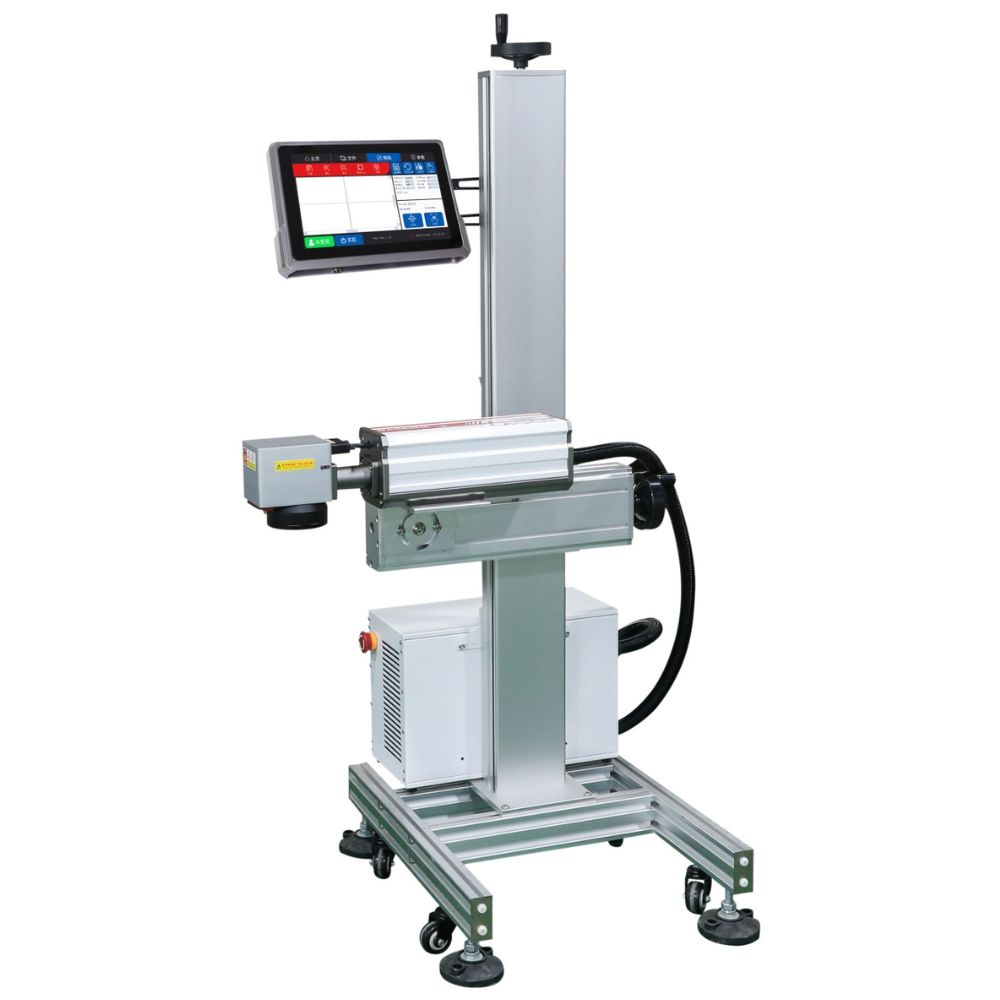
Print Capacity Upto 500K characters
Characters Speed Upto 250/sec
Print Capacity Upto 1000 characters
Characters Speed Upto 16 /sec
Print Capacity Upto 200-300 characters
Characters Speed Upto 200-300 /sec
Frequently Asked Questions
A fiber laser marking machine creates permanent marks — such as serial numbers, logos, barcodes, and deep engravings — on metals, plastics, and ceramics with high speed and precision.
A quality fiber laser source commonly lasts tens of thousands of hours; actual life depends on usage, duty cycle, and operating environment.
Common laser marking software supports vector files (DXF, AI), barcode/QR generation, and CSV import for batch serialization. Ensure the software is user-friendly and supports automation if needed.
Laser safety goggles rated for the laser wavelength, proper fume extraction, enclosed work areas or interlocks for high-power lasers, and operator training.
Yes — fiber lasers can mark high-resolution, scannable barcodes and QR codes suitable for industrial traceability and product serialization.
Conclusions
To pick the right fiber laser marking machine, match power, optics, and software to your materials and production volume.
Quick decision checklist
- What materials will you mark most often? (choose power & optics accordingly)
- Do you need handheld/portable marking or fixed-station production?
- How important is color/annealed marking? (consider MOPA)
- What is your expected daily throughput? (select speed and automation accordingly)
- What level of local support and spare parts do you require?
Invest in sample tests, insist on a demo, and choose a vendor with strong after-sales service. The right fiber laser marker will pay for itself by improving traceability, quality, and speed.
Related Posts