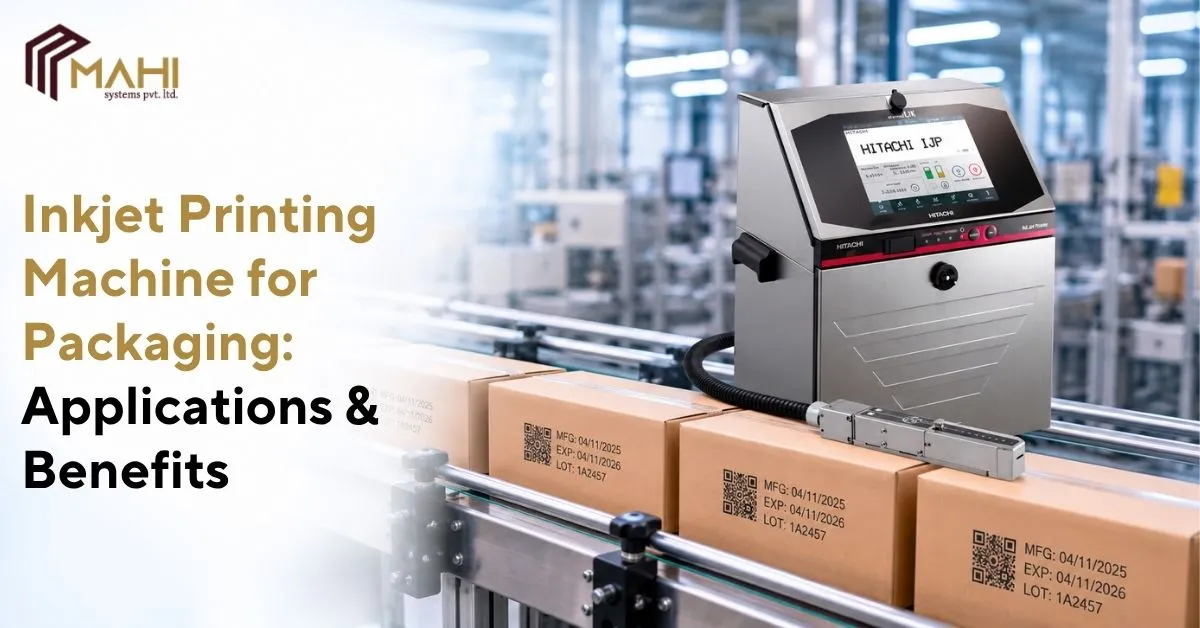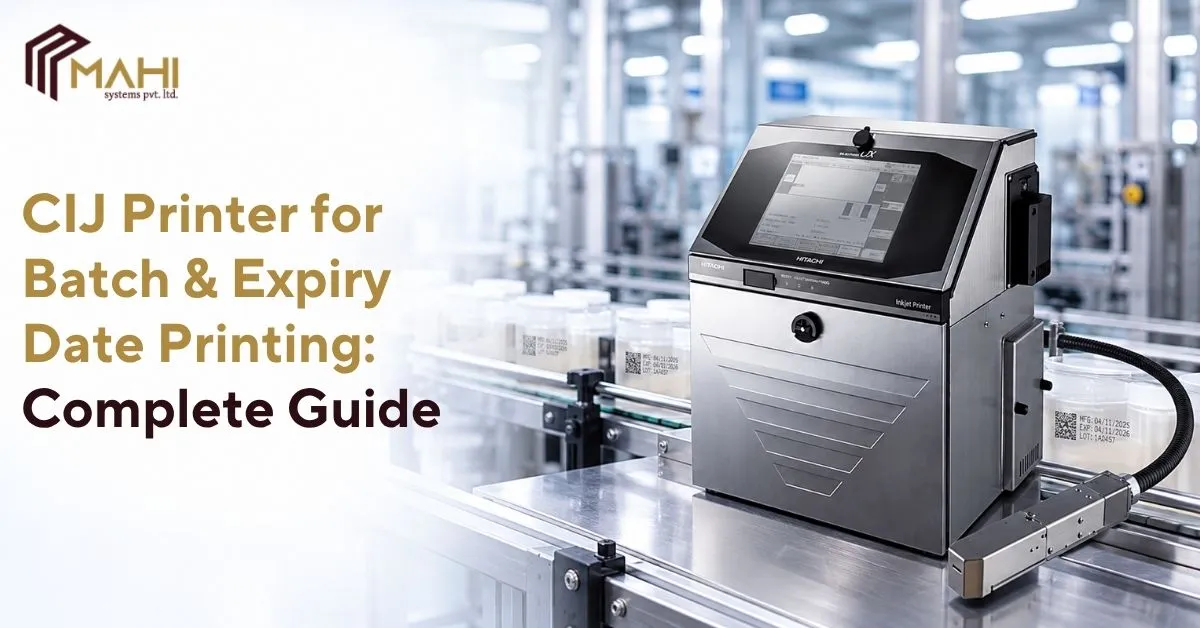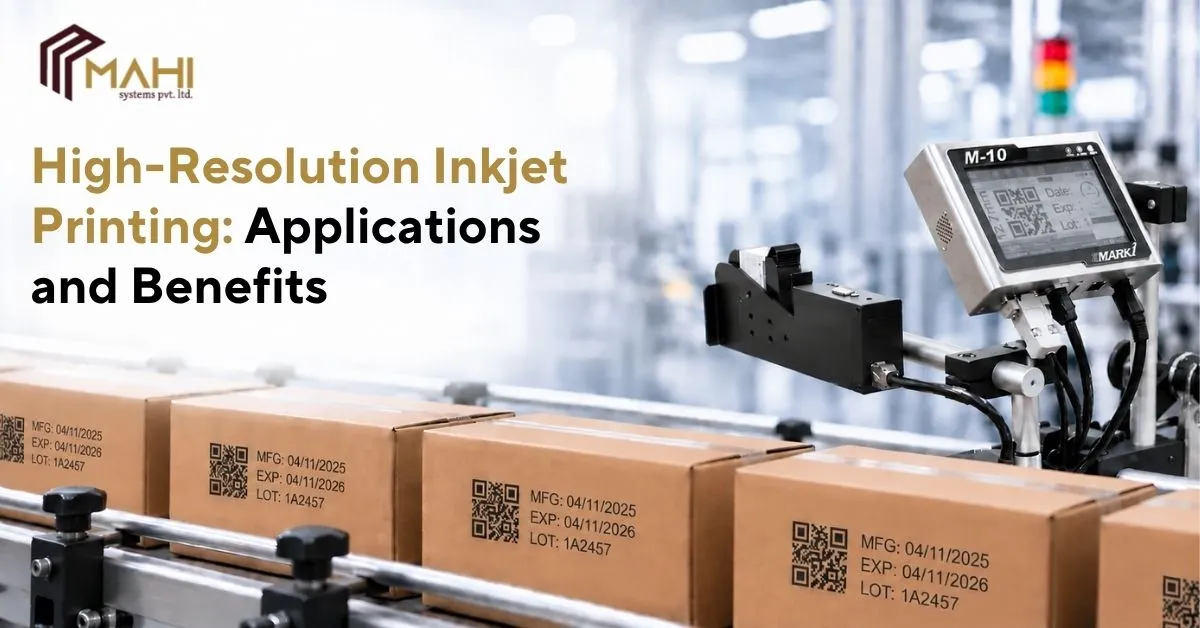
Packaging needs to communicate more than a product name. Manufacturing dates, expiry dates, batch numbers,…
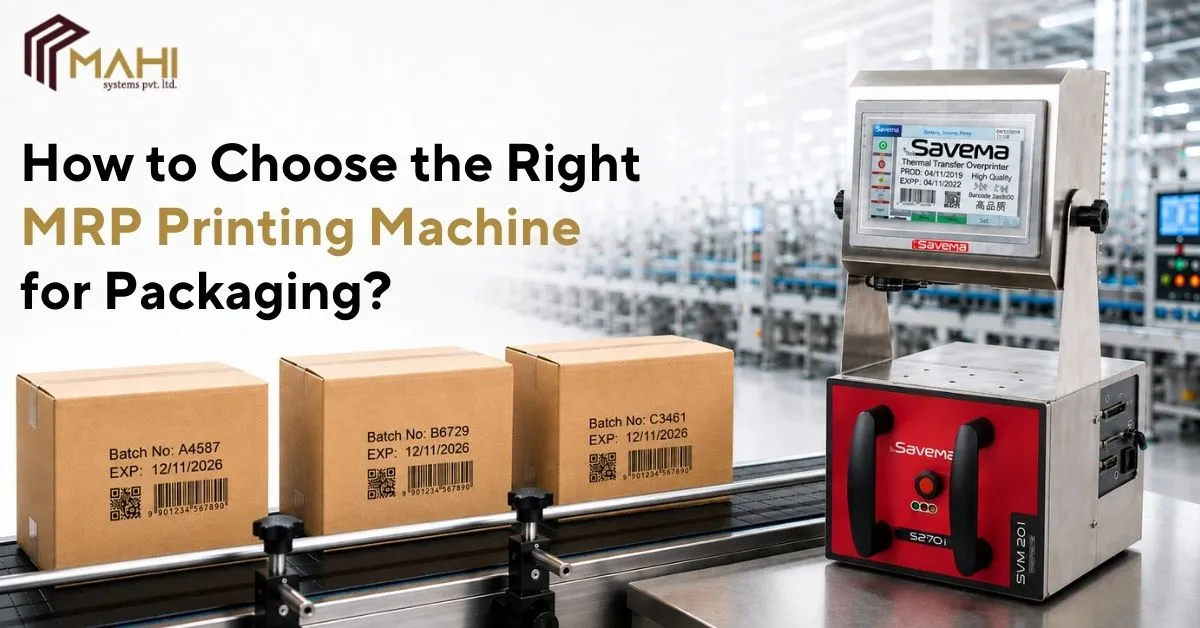
Printing the Maximum Retail Price (MRP) is an important part of product packaging. Manufacturers may also need to print manufacturing dates, expiry dates, batch numbers, barcodes, QR codes, and other variable information on their products.
Choosing the right MRP Printing Machine depends on the packaging material, production speed, required information, print quality, and operating conditions. Selecting a suitable system can help manufacturers maintain accurate coding and efficient packaging operations.
What Is an MRP Printing Machine?
An MRP Printing Machine is an industrial coding system used to print the Maximum Retail Price and other product information directly onto packaging.
Depending on the printing technology and application, a machine can print:
- Maximum Retail Price (MRP)
- Manufacturing date
- Expiry or best-before date
- Batch numbers
- Lot numbers
- Barcodes
- QR codes
- Product identification information
- Other variable data
Automated printing allows manufacturers to apply this information consistently during production instead of relying on manual stamping or labeling.
Why Is Choosing the Right Machine Important?
Different packaging materials and production lines have different coding requirements. A machine suitable for printing on bottles may not be the best choice for flexible packaging films or pouches.
The right equipment should match the product, packaging surface, production speed, and type of information being printed.
A suitable system can help manufacturers achieve:
- Accurate MRP and date printing
- Consistent coding quality
- Faster production operations
- Reduced manual coding errors
- Better product traceability
- Efficient packaging processes
Factors to Consider When Choosing an MRP Printing Machine
Selecting the right MRP printing machine requires evaluating print quality, product surface, production speed, coding requirements, and machine compatibility to ensure reliable and efficient product marking.
- Packaging Material: The packaging surface should be one of the first considerations when selecting a machine.
- Production Line Speed: Production speed is another important factor. Manufacturers should check the printer’s printing speed against the actual production-line requirements before purchasing.
- Information to Be Printed: Consider exactly what needs to appear on the package. The amount and type of information required can influence the suitable printing technology and system configuration.
- Print Quality and Readability: The printed information must remain clear and readable on the package.
- Code Durability: Consider how the printed information will be handled after production. Packaging may encounter moisture, friction, heat, dust, or other conditions during storage and transportation.
- Printing Technology: There are different technologies available for packaging coding. The choice should depend on the packaging material and production requirements.
- Production Environment: The environment where the machine will operate is also important.
- Maintenance Requirements: Maintenance should be considered before purchasing any coding equipment.
- Overall Operating Cost: The purchase price is not the only cost associated with an MRP Printing Machine.
Which Printing Technology Should You Choose?
| Requirement | Suitable Technology |
| High-speed non-contact coding | Continuous Inkjet |
| Permanent marking | Laser |
| Flexible packaging films and pouches | Thermal Transfer Overprinting |
| Bottles and containers | Continuous Inkjet |
| Durable marking on suitable surfaces | Laser |
The final choice should always be based on the specific packaging material, production conditions, and coding requirements.
What Can an MRP Printing Machine Print?
Modern MRP printing machines can print a wide range of product information, including MRP, batch numbers, manufacturing dates, expiry dates, barcodes, QR codes, serial numbers, and other variable data, depending on the selected printing technology and configuration.
Common information includes:
- MRP
- Manufacturing date
- Expiry date
- Batch number
- Lot number
- Barcodes
- QR codes
- Product codes
- Variable production information
This allows manufacturers to combine pricing, identification, and traceability information within the packaging process.
Benefits of Using the Right MRP Printing Machine
Selecting the right MRP printing machine that matches your packaging requirements can improve print accuracy, coding consistency, production efficiency, readability, and overall product identification while reducing printing errors and operational interruptions.
- Accurate Product Coding: Automated printing helps apply MRP, dates, and other variable information consistently.
- Reduced Manual Errors: Automatic coding reduces dependence on manual stamping and labeling, helping minimize coding mistakes.
- Improved Production Efficiency: A suitable machine can operate alongside the production line and support continuous packaging operations.
- Better Traceability: Batch numbers and other variable information help identify products and support traceability through distribution.
- Consistent Print Quality: The appropriate printing technology can provide clear and repeatable coding across production batches.
- Flexible Information Printing: Modern systems can accommodate different types of variable product information according to packaging requirements.
Need the right MRP Printing Machine for your packaging line? Contact Us for reliable industrial coding solutions.
Common Packaging Applications
Packaging lines across different industries require accurate and readable product information. An MRP printing machine helps manufacturers print essential details such as MRP, batch numbers, manufacturing dates, expiry dates, barcodes, and other variable data on cartons, pouches, bottles, labels, films, boxes, and other packaging formats.
- FMCG
- Food and beverage
- Pharmaceuticals
- Cosmetics and personal care
- Dairy
- Chemicals
- Consumer goods
The required printing technology will vary according to the product and packaging material.
When Should You Choose a Compact Printing Solution?
Smaller production setups may have limited installation space or lower coding requirements. In such cases, a compact printing system can be considered if its printing capabilities match the application.
However, machine size should not be the only deciding factor. Manufacturers should still evaluate printing speed, substrate compatibility, code requirements, maintenance, and integration before making a selection.
What Should You Check Before Buying?
Before purchasing an MRP Printing Machine, review the following points:
- Packaging material – Determine the surface that needs to be coded.
- Production speed – Match the machine with the packaging-line speed.
- Code requirements – Identify whether you need MRP, dates, batch numbers, barcodes, or QR codes.
- Print quality – Check the required character size and readability.
- Code durability – Consider exposure to moisture, handling, and other conditions.
- Printing technology – Select the technology appropriate for the application.
- Integration – Ensure compatibility with the existing production line.
- Maintenance – Evaluate routine maintenance and service requirements.
- Consumables – Consider ink, ribbon, or other operating requirements.
- Total operating cost – Compare the long-term cost rather than only the purchase price
Frequently Asked Questions
An MRP Printing Machine is an industrial coding system used to print MRP, manufacturing dates, expiry dates, batch numbers, and other variable product information on packaging.
Consider the packaging material, production speed, required information, print quality, code durability, printing technology, operating environment, maintenance, integration, and overall operating cost.
Continuous Inkjet technology is suitable for high-speed, non-contact coding on compatible packaging surfaces such as bottles and containers.
Yes. Depending on the machine and configuration, it can print manufacturing dates, expiry or best-before dates, MRP, batch numbers, and other variable information.
Yes. Thermal Transfer Overprinting is designed for suitable flexible packaging materials such as films, pouches, and laminates.
Conclusion
Choosing the right MRP Printing Machine requires more than comparing machine prices. Manufacturers should consider the packaging material, production speed, information to be printed, print quality, code durability, operating environment, integration, maintenance, and long-term operating costs.
Continuous Inkjet, laser, and Thermal Transfer Overprinting technologies each serve different packaging requirements. By matching the printing technology with the actual production and packaging needs, manufacturers can achieve accurate coding, consistent print quality, and efficient packaging operations.
Related Posts