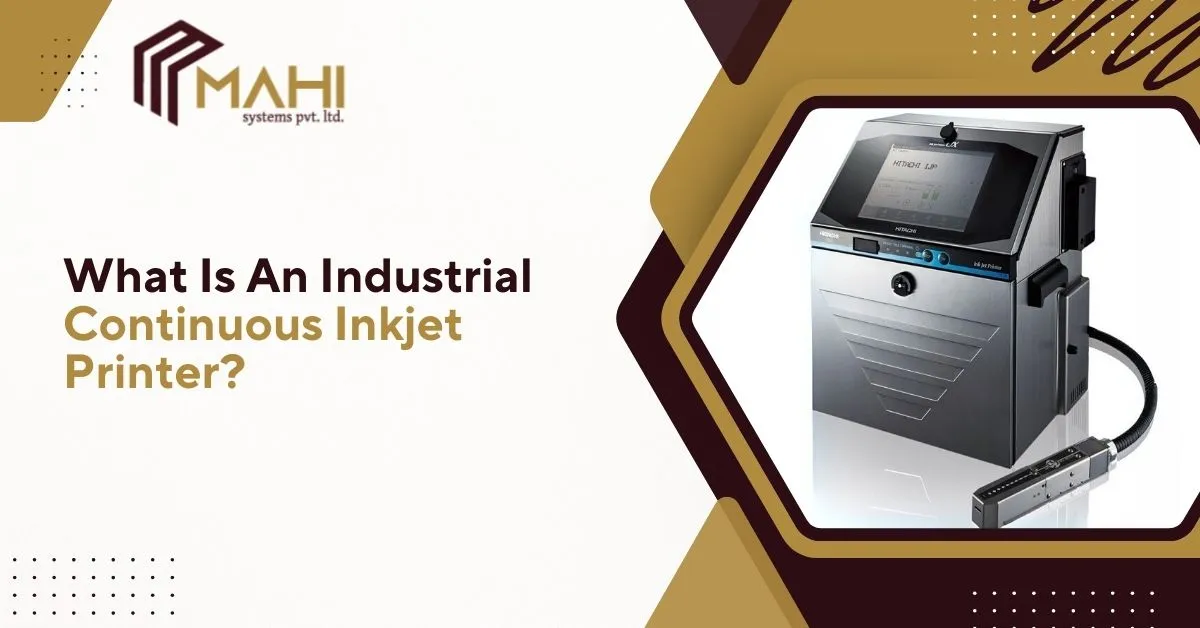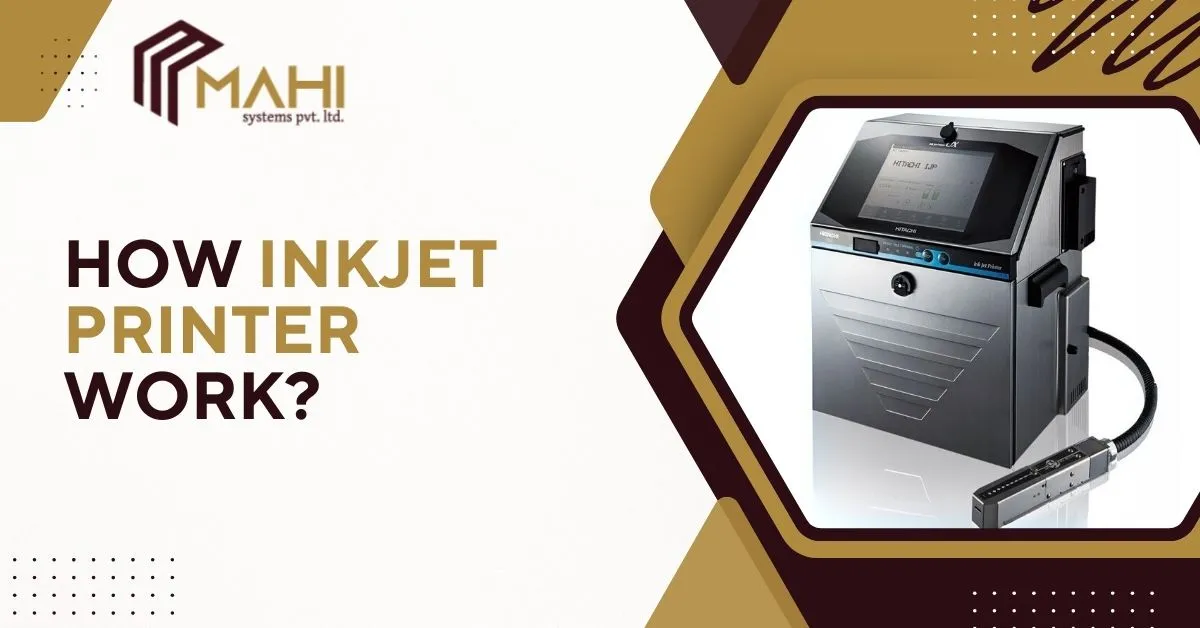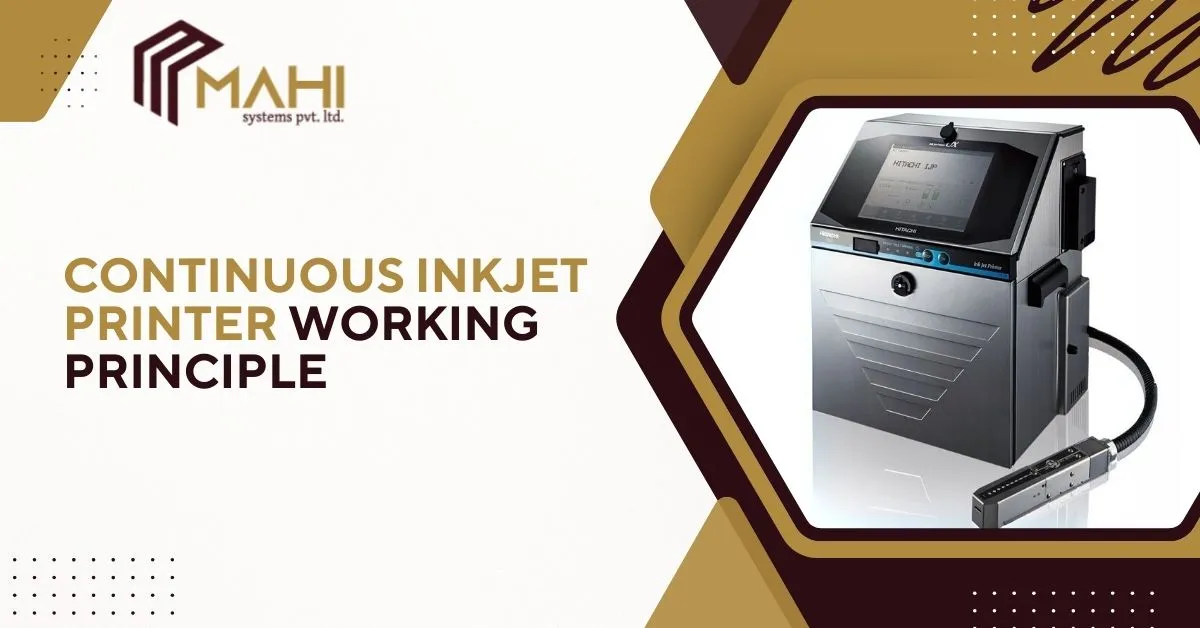
Industrial product identification is critical for traceability, compliance, and brand protection. From expiry dates to…
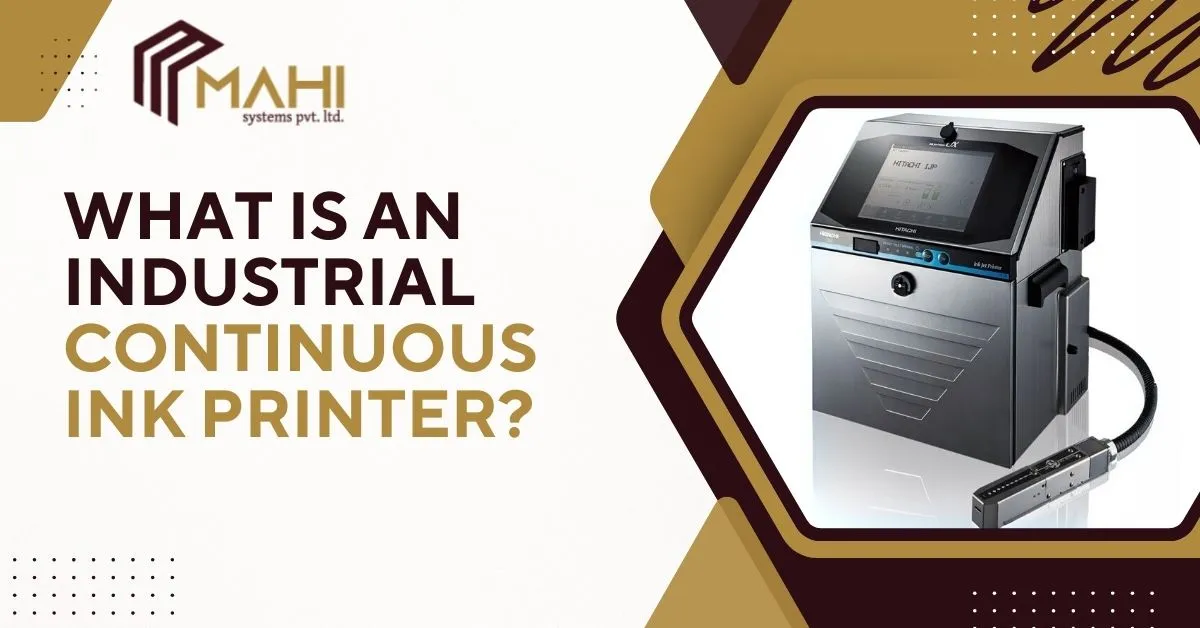
An industrial Continuous Inkjet Printer is a high-speed, non-contact coding system used to print dates, batch numbers, barcodes, and variable data on products moving at high speed. In modern manufacturing environments, the Continuous Inkjet Printer plays a critical role by delivering reliable marking on plastics, glass, metals, cartons, and flexible packaging without touching the product surface.
How an industrial Continuous Inkjet Printer Works?
The working principle of a Continuous Inkjet Printer involves breaking a pressurized ink stream into uniform droplets and electrically charging selected droplets to create text or images. During operation, the Continuous Inkjet Printer uses electrostatic deflection to guide charged droplets onto the product while unused droplets are safely recycled back into the ink system.
Core steps in the process
- Ink pumped to the print head.
- Jet breaks into droplets at high frequency.
- Droplets are charged per the image data.
- Deflection plates steer charged drops; unused drops recycle.
- Printed image forms as droplets strikes the surface.
Key Components of a Continuous Inkjet Printer
Every Continuous Inkjet Printer is built with specialized components that ensure accuracy and reliability. At the heart of the system, the Continuous Inkjet Printer includes a print head, nozzle, ink circulation unit, charging electrodes, deflection plates, and a controller that manages print data, speed, and communication with the production line.
Important components
- Print head & nozzle — forms the continuous jet.
- Charge & deflection system — selects and directs droplets.
- Ink recirculation & filtration — keeps the ink clean and ready.
- Controller & software — converts data to charge signals.
- Maintenance/recovery unit — protects and cleans the system.
Types of Continuous Inkjet Printers
Manufacturers offer different types of Continuous Inkjet Printer models to suit varied applications. In the center of industrial coding choices, the Continuous Inkjet Printer may be available as standard dye-based CIJ, pigmented CIJ for dark surfaces, or high-speed CIJ systems designed for extremely fast packaging lines.
Materials and Surfaces Suitable for CIJ Printing
One major advantage of a Continuous Inkjet Printer is its ability to print on almost any surface. In daily manufacturing operations, the Continuous Inkjet Printer is used on PET bottles, glass containers, metal cans, plastic films, cartons, cables, and even curved or uneven surfaces where contact-based printing is not possible.
Improve traceability and print quality with CIJ technology.
Contact us now for expert guidance and support.
Industrial Applications of Continuous Inkjet Printers
A Continuous Inkjet Printer is widely used across industries such as food and beverage, pharmaceuticals, FMCG, automotive, and electronics. In the center of traceability and compliance systems, the Continuous Inkjet Printer ensures clear and readable codes for expiry dates, lot numbers, serial numbers, and regulatory markings.
Top applications
- Best-before dates, batch & lot codes on food and drinks.
- UID, batch codes, and regulatory marks in pharma.
- Traceability codes on automotive and electronic parts.
- Barcodes/QR codes for logistics and warehousing.
Advantages of Using a Continuous Inkjet Printer
Compared to other marking technologies, a Continuous Inkjet Printer offers unmatched speed and versatility. For manufacturers focused on uptime, the Continuous Inkjet Printer provides non-contact printing, quick changeovers, high throughput, and reliable performance even in dusty, humid, or high-temperature environments.
Key advantages
- Extremely fast (suitable for high line speeds).
- Non-contact: safe for fragile and irregular surfaces.
- Versatile inks & substrates.
- Low interruption: continuous recirculation reduces downtime.
Continuous Inkjet Printer — CIJ vs. Other Technologies
| Feature | Continuous Inkjet (CIJ) | Thermal Inkjet (TIJ) | Laser Marking |
| Speed | Very High | Medium | High |
| Surface types | Most surfaces | Best on porous/some coated | Metals, plastics (requires absorption) |
| Contact | Non-contact | Non-contact | Non-contact |
| Consumables | Ink & makeup fluids | Cartridges | No consumables (some filters) |
| Best use | High-speed production | Smaller lines, high-detail | Permanent marks, high precision |
Takeaway: For very fast, variable inline marking, Continuous Inkjet Printer are frequently the best fit.
Maintenance and Running Cost of Continuous Inkjet Printers
Maintenance for a Continuous Inkjet Printer includes periodic nozzle checks, filtration changes, ink and makeup fluid replenishment, and recovery routines to keep the jet stable. While CIJ requires consumables (ink and makeup fluid), modern systems have user-friendly maintenance modes that minimize operator time. Proper maintenance extends uptime and keeps print quality high.
How to Choose the Right CIJ Printer?
Selecting the right Continuous Inkjet Printer depends on line speed, substrate type, ink durability, and integration needs. At the center of smart purchasing decisions, the Continuous Inkjet Printer should match current production requirements while supporting future needs such as serialization, automation, and Industry 4.0 connectivity.
Selection checklist
- Line speed and throughput needs.
- Substrate and surface types.
- Required print contrast and permanence.
- Integration with line automation and PLCs.
- After-sales support and parts availability.
Frequently Asked Questions
A Continuous Inkjet Printer is used for high-speed industrial coding — printing dates, batch numbers, barcodes, and traceability data on moving products. Its non-contact method suits bottles, cans, films, and complex shapes.
It forms a continuous stream of ink droplets, charges droplets selectively and deflects them to print; unneeded droplets are recirculated. This allows continuous, variable-data printing at very high speeds.
Yes. Because CIJ is a non-contact process, Continuous Inkjet Printers can mark curved, uneven, and moving surfaces with clear, consistent results.
CIJ inks can be formulated for differing permanence — from removable to highly durable, pigmented options for contrast on dark substrates and specialty inks (food-grade, solvent-resistant) for specific industries.
Maintenance frequency varies with usage, but daily checks and scheduled filter/nozzle servicing are common. Many CIJ systems include automated maintenance cycles to minimize operator effort.
Conclusion
An industrial Continuous Inkjet Printer is a proven and essential solution for manufacturers that require fast, reliable, and flexible coding. By choosing the right model and ink type, the Continuous Inkjet Printer helps businesses improve traceability, maintain compliance, and achieve consistent marking quality across high-speed production lines.
Related Posts