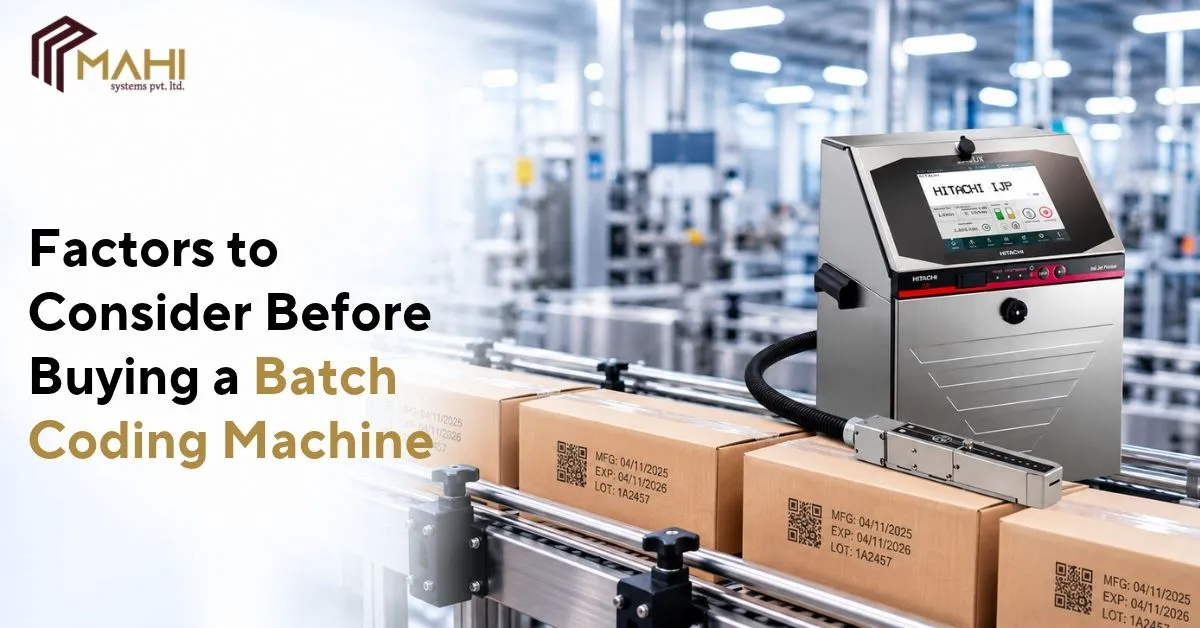
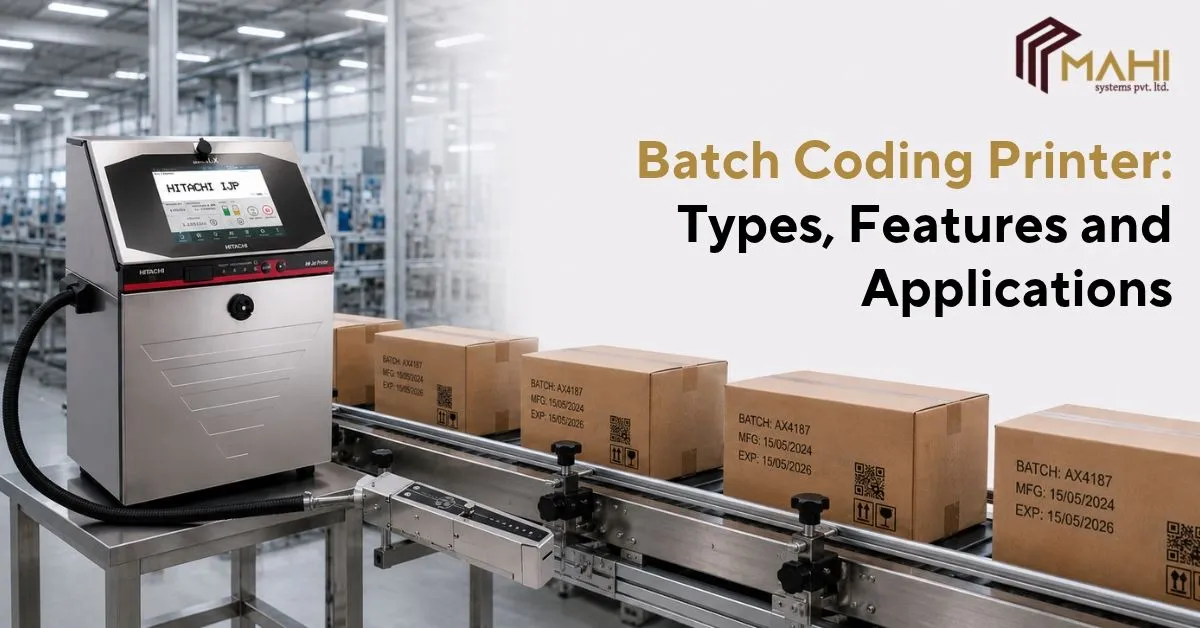
Choosing the right coding equipment is important for maintaining print quality, production efficiency, and consistent…
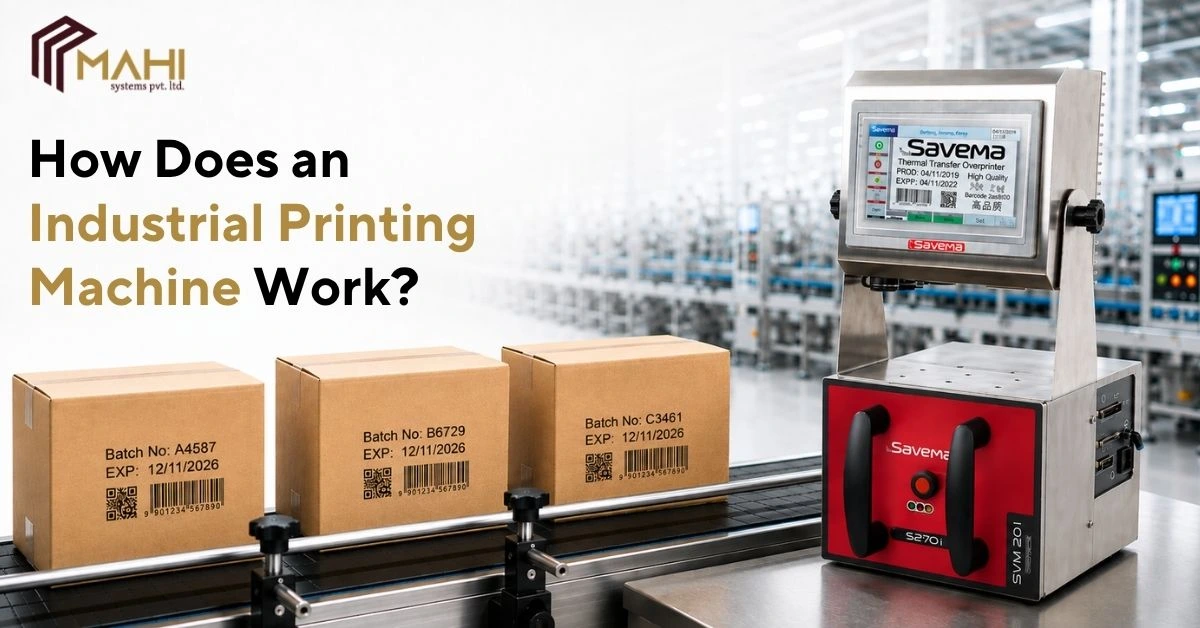
Manufacturers need to print product details, batch numbers, manufacturing dates, expiry dates, barcodes, and other information clearly during production. Different printing technologies help businesses mark products and packaging at different speeds and on various surfaces. Understanding how an Industrial Printing Machine works helps manufacturers choose suitable equipment for their production lines, packaging materials, and coding requirements.
What Is an Industrial Printing Machine?
An Industrial Printing Machine is equipment designed to print or mark information on products, labels, cartons, flexible packaging, and other surfaces. Depending on the application, it may use inkjet technology, thermal transfer, piezoelectric ink ejection, or laser marking.
These systems are widely used in food processing, pharmaceuticals, cosmetics, electronics, and general manufacturing for product identification and traceability.
How Industrial Printing Machines Work?: A Complete Guide
The working process of an Industrial Printing Machine depends on the printing technology, but most systems follow a few basic steps.
1. Data Input and Message Setup
The operator enters the information to be printed, such as batch numbers, expiry dates, product codes, or barcodes. Some systems can receive variable data from connected production equipment or control systems.
2. Product Detection and Positioning
In automated production lines, sensors may detect when a product reaches the printing point. The machine coordinates printing with product movement to help position the information correctly.
3. Printing or Marking
The printer applies the information using its specific technology. Inkjet systems deposit ink onto the surface, thermal transfer systems transfer ink from a ribbon, and laser systems create marks on compatible materials.
4. Print Verification
Operators may inspect the printed information manually or use vision inspection systems to check readability, placement, and code accuracy. This helps identify printing issues before products move further along the production line.
Types of Industrial Printing Machines and Their Working Methods
Different Industrial Printing Machine technologies are designed for specific materials and applications.
- Continuous Inkjet (CIJ) Printer: Projects small ink droplets onto products without direct contact, making it suitable for fast-moving production lines and curved surfaces.
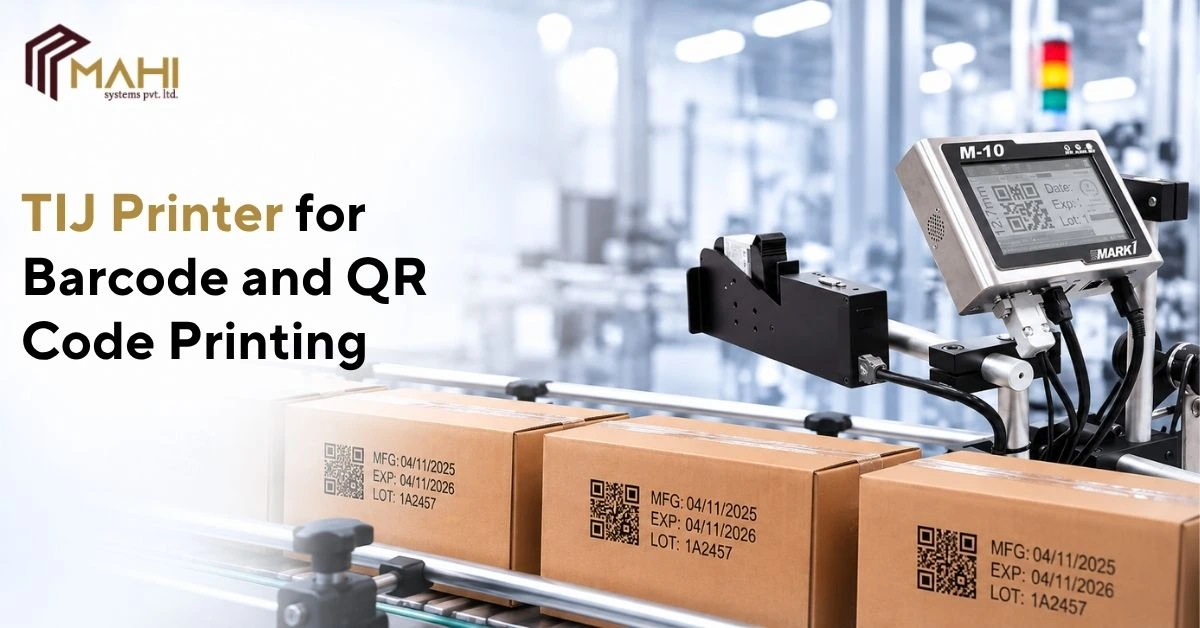
- Thermal Inkjet (TIJ) Printer: Uses heat to eject ink droplets, producing clear text, barcodes, and codes on compatible packaging materials.
- Thermal Transfer Over printer (TTO): Uses a heated printhead and ribbon to transfer information onto flexible packaging films and labels.
- Large Character Inkjet Printer: Prints large, visible text and codes on outer cartons, boxes, and sacks.
- Piezo Inkjet Printer: Uses piezoelectric elements to eject ink droplets, supporting printing applications that require compatible inks and controlled droplet placement.
- Laser Marking Machine: Uses a focused laser beam to create marks on suitable materials, without conventional ink-based printing.
Looking to improve your production-line printing? Contact Us to explore suitable industrial coding and marking solutions.
Key Factors That Affect Printing Performance
When selecting an Industrial Printing Machine, consider the following factors:
- Printing speed: The machine should match the production line’s operating speed.
- Material compatibility: Confirm that the technology works with the product surface or packaging material.
- Print quality: Text, dates, barcodes, and codes should remain readable.
- Operating costs: Consider ink, ribbons, maintenance, and other consumables where applicable.
- Integration: Check compatibility with conveyors, sensors, and existing packaging equipment.
Applications of Industrial Printing Machines
An Industrial printing systems support several manufacturing operations, including:
- Food and beverages: Printing manufacturing dates, expiry dates, and batch numbers.
- Pharmaceuticals: Marking product identification details and codes on packaging.
- Cosmetics: Printing information on bottles, tubes, cartons, and labels.
- Logistics and warehousing: Applying large identification codes to shipping cartons and boxes.
- Industrial manufacturing: Marking components, cables, pipes, and other manufactured products.
Frequently Asked Questions
It prints or marks product information, batch numbers, dates, barcodes, and identification codes on products and packaging.
It ejects controlled ink droplets onto a surface to create text, codes, or graphics. The exact mechanism depends on the inkjet technology.
TTO printers are commonly used for printing variable information on compatible flexible films, pouches, and wrappers.
Yes. Many systems can integrate with conveyors, sensors, and packaging equipment to print on products as they move through production.
Consider the packaging material, required print size and quality, production speed, integration needs, and ongoing operating costs.
Conclusion
An Industrial Printing Machine helps manufacturers apply clear, consistent information to products and packaging. Understanding different printing technologies makes it easier to compare speed, material compatibility, print quality, and operating costs before selecting equipment that meets specific production requirements.
Related Posts