Choosing the right coding equipment is important for maintaining print quality, production efficiency, and consistent…
Choosing printing equipment is an important decision for manufacturing and packaging businesses. Product codes, batch numbers, manufacturing and expiry dates, barcodes, and QR codes must remain readable throughout production and distribution. The right equipment helps maintain consistent identification without interrupting the production line.
Different products and packaging materials need different coding methods. Before investing in an Industrial Printing Machine, businesses should understand what they need to print, where they need to print it, and how quickly their line operates.
1. Define Your Coding Requirements
List the information that must appear on each product: batch details, dates, MRP, serial numbers, barcodes, or QR codes. Then identify the surface: bottles, cartons, pouches, flexible films, cables, pipes, or components.
Consider the print area, code size, print position, and whether information changes between products. These details help narrow down the right Industrial Printing Machine and industrial coding equipment instead of choosing a solution based only on price.
2. Match the Technology to the Application
Different technologies suit different coding tasks. Relevant options in the product range include:
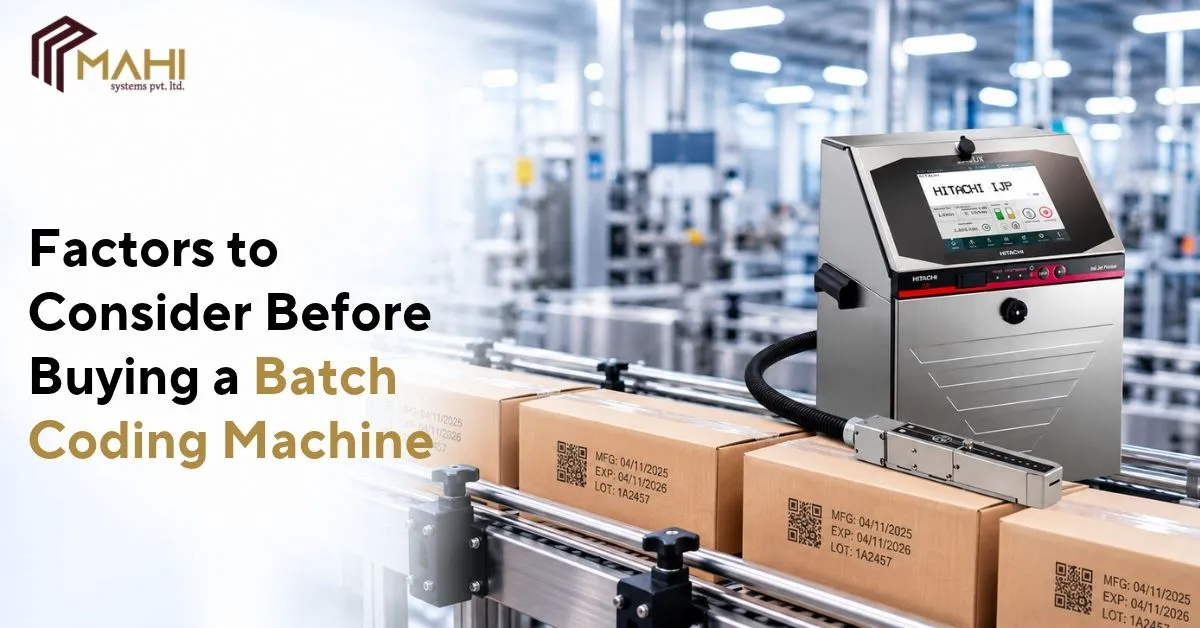
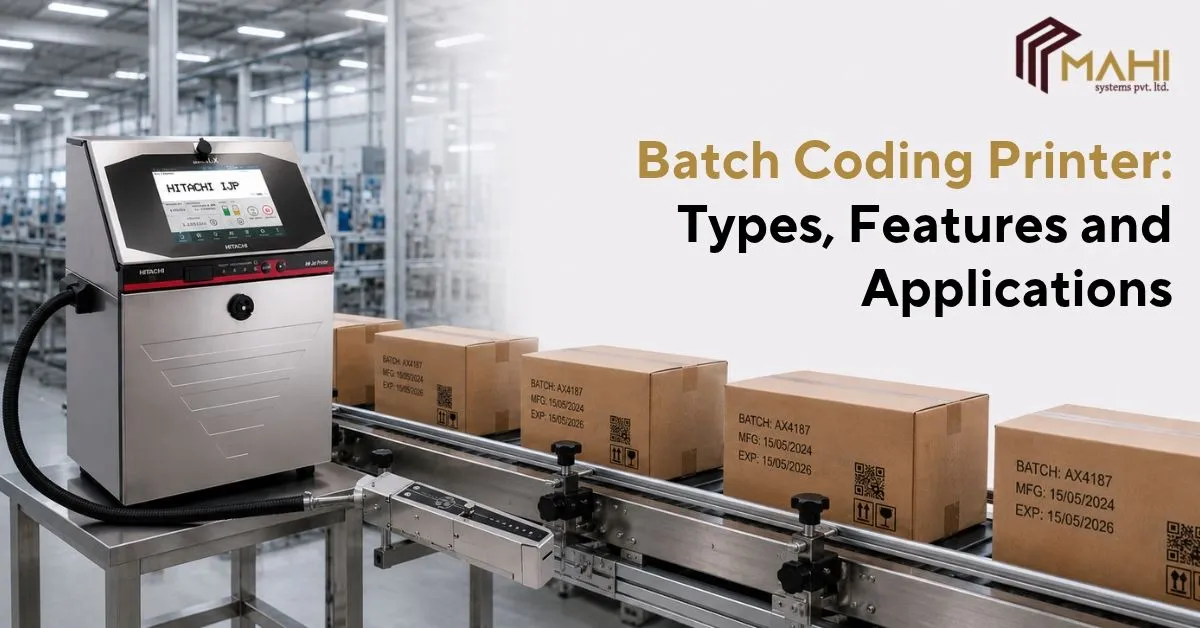
- CIJ printers: Hitachi UX Series models are used for continuous inkjet coding on products moving through production lines.
- TIJ printers: MARK ONE M10 and M20 printers suit applications requiring clear inkjet codes and product information.
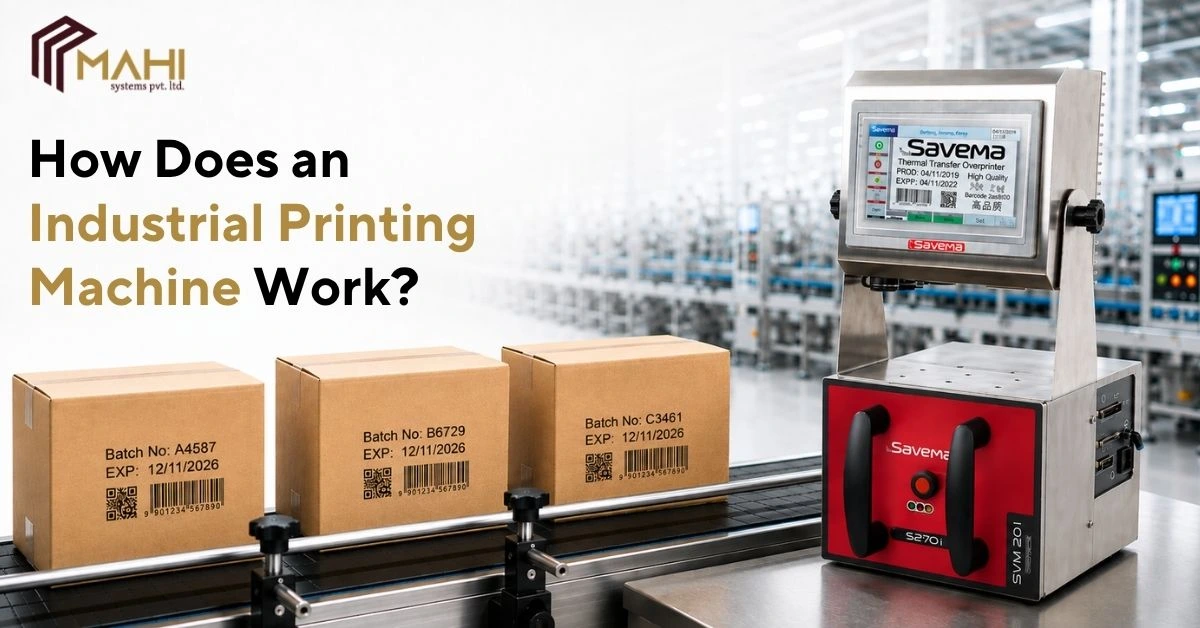
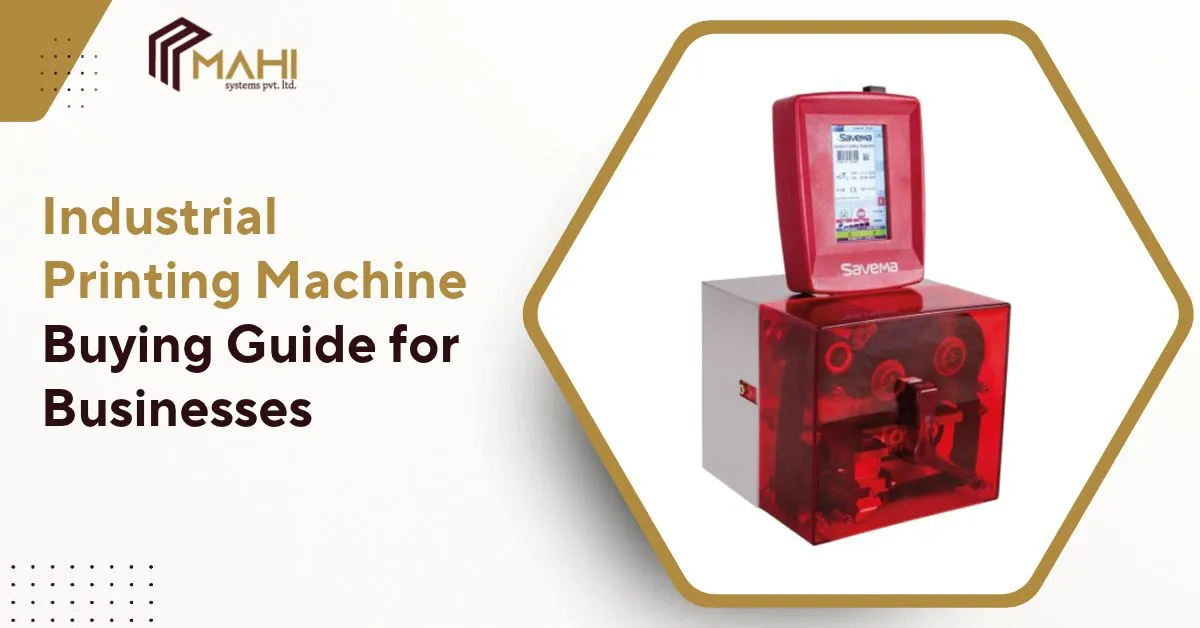
- TTO printers: Savema C, I, and TR models are designed for thermal transfer overprinting, particularly on suitable flexible packaging.
- Large Character Inkjet printers: RN JET 72, 72 XL, and 144 XL models address applications requiring larger characters.
- Fiber laser marking machines: Fiber ON FLY and Fiber TT models are options for permanent marking on compatible materials.
A suitable Industrial Printing Machine matches the substrate, code, and production process. Do not select a technology simply because it offers more features.
3. Check Material Compatibility
A printer that works on a carton may not produce the same result on a pouch, bottle, cable, or metal component. Confirm that the printing method and, where applicable, ink or ribbon suit the actual surface.
Before finalising an Industrial Printing Machine, request a sample print using your own packaging material. Check adhesion, contrast, placement, drying behaviour where relevant, and readability after normal handling. This test can reveal potential issues before installation.
Looking for the right industrial coding and marking solution? Contact us to discuss your production requirements.
4. Match Printing Speed to Your Line
The printer must keep pace with production while maintaining clear codes. Consider products per minute, conveyor speed, character count, code complexity, and whether printing is continuous or intermittent.
Allow for future production changes too. An Industrial Printing Machine that suits today’s output should not become a bottleneck when demand increases.
5. Evaluate Print Quality and Integration
Check that characters are legible and that barcodes or QR codes can be scanned when required. Print position, resolution, contrast, and consistency all matter. Confirm that the printer can work with existing conveyors, sensors, and packaging equipment.
When selecting an Industrial Coding and Marking Machine, ask about message setup, product changeovers, operator training, and support if a fault occurs. Good integration and technical assistance can help limit downtime and maintain smoother production operations.
6. Calculate the Total Cost of Ownership
Do not compare machines by purchase price alone. Include ink, solvent, ribbons, cartridges, replacement parts, routine maintenance, and service costs. Consider how often consumables need replacing and how easily they can be sourced.
The right Industrial Printing Machine should meet application requirements while keeping ongoing costs and maintenance practical.
Frequently Asked Questions
An Industrial Printing Machine prints or marks information such as batch numbers, manufacturing dates, expiry dates, barcodes, QR codes, and product details during manufacturing and packaging.
The choice depends on the packaging material and printing requirements. CIJ, TIJ, and TTO technologies are suitable options for different product and packaging applications.
Businesses should evaluate material compatibility, production speed, print quality, coding requirements, consumable costs, maintenance, and integration with existing production equipment.
CIJ printers use a continuous stream of ink droplets for coding, while TIJ printers use thermal energy to eject ink droplets. Their suitability depends on the application and printing requirements.
Businesses can compare consumable consumption, maintenance requirements, spare parts availability, and technical support before purchasing. Regular maintenance and selecting suitable technology can also help manage operating expenses.
Conclusion
Choosing Industrial Printing Machine starts with understanding the product, packaging surface, code requirements, and production speed. Sample testing, checking integration, and comparing long-term costs help businesses make an informed decision. Matching technology to the application can improve coding consistency, support traceability, and keep production moving efficiently.
Related Posts