Modern packaging lines rely on automation to move cartons consistently from one stage to another…
Food packaging plays a critical role in product safety, traceability, and regulatory compliance. Every packaged food product must carry clear information such as manufacturing dates, expiry dates, batch numbers, barcodes, and QR codes. Poor print quality can create challenges in inventory management, product recalls, and consumer confidence.
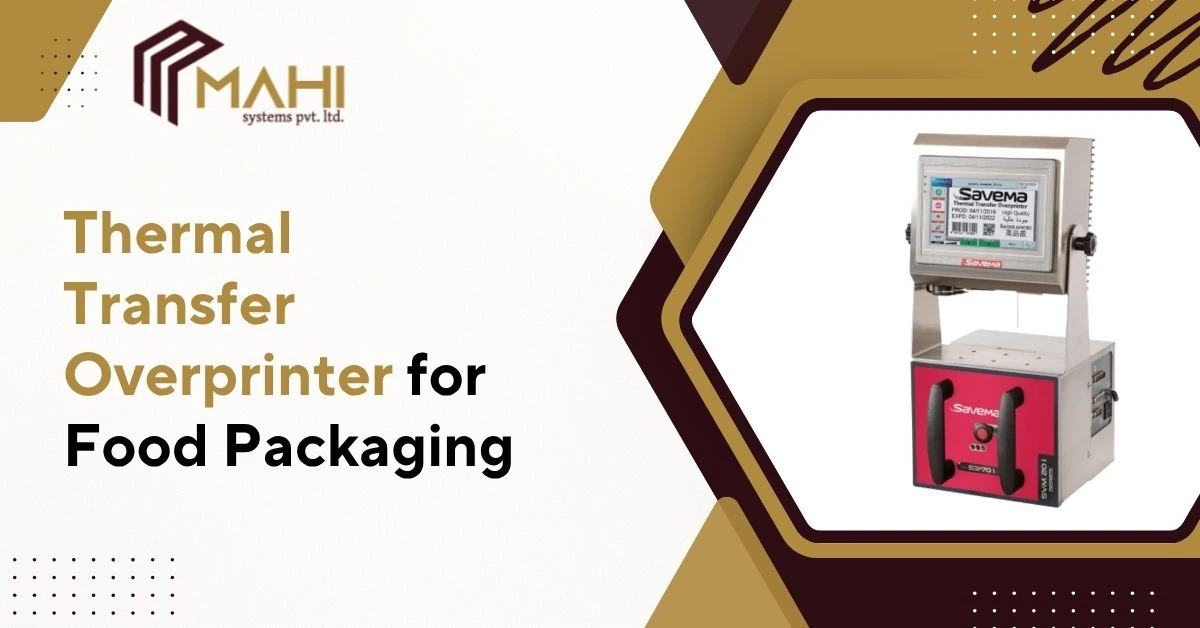
As food manufacturers continue to increase production speeds and adopt flexible packaging formats, the need for reliable coding technology has become more important than ever. A Thermal Transfer Over Printer provides high-resolution and durable printing directly on packaging materials, helping manufacturers maintain coding accuracy while meeting industry requirements. Reliable coding solutions have become an essential part of modern food packaging operations.
Why Coding Matters in Food Packaging?
Food products move through multiple stages before reaching consumers, making accurate coding essential for traceability and quality control. Every package must display important information that remains clear throughout storage, transportation, and retail handling.
In modern production facilities, a Thermal Transfer Over Printer helps manufacturers print batch codes, manufacturing dates, expiry dates, barcodes, and QR codes with excellent clarity.
Accurate coding supports compliance requirements while improving product identification and supply chain visibility.
Challenges of Printing on Flexible Food Packaging
Food manufacturers commonly use flexible packaging materials such as laminated pouches, plastic films, wrappers, and foils. These materials can be difficult to print on consistently, especially in high-speed production environments.
To overcome these challenges, a Thermal Transfer Over Printer delivers precise and reliable printing on flexible substrates without compromising print quality.
Common packaging challenges include:
- Smudged codes
- Poor barcode readability
- Ink transfer issues
- High-speed production demands
- Frequent packaging material changes
Effective coding technology helps address these challenges while maintaining production efficiency.
How Thermal Transfer Technology Supports Food Packaging?
Thermal transfer technology uses controlled heat to transfer ink from a ribbon onto the packaging surface. This process creates durable and high-resolution prints that remain legible throughout the product lifecycle.
Within food packaging operations, a Thermal Transfer Over Printer provides consistent coding performance across a wide variety of packaging materials and production environments.
Key benefits include:
- Sharp print quality
- High-resolution graphics
- Durable coding
- Smudge-resistant printing
- Reliable barcode generation
These advantages make thermal transfer technology a preferred choice for food manufacturers.
Common Food Packaging Applications
| Food Packaging Type | Typical Printing Requirements |
| Snack Pouches | Batch codes, expiry dates |
| Dairy Products | Manufacturing and expiry information |
| Frozen Foods | Product identification codes |
| Bakery Products | Date codes and traceability details |
| Beverage Packaging | QR codes and batch information |
| Ready-to-Eat Foods | Regulatory and product information |
These applications demonstrate the importance of dependable coding systems in food production.
Printing Batch Codes, Expiry Dates, and Barcodes
Food manufacturers require coding systems capable of printing variable information accurately and consistently. Clear and readable codes help improve traceability while reducing operational risks.
A TTO Printer enables precise printing of:
- Batch numbers
- Manufacturing dates
- Expiry dates
- QR codes
- Barcodes
- Product information
- Logos
Consistent print quality helps ensure compliance and product identification throughout the supply chain.
Looking for a reliable TTO Printer for food packaging applications? Contact us for high-quality coding solutions designed for flexible packaging and production efficiency.
Continuous and Intermittent Packaging Line Compatibility
Different food packaging lines operate at varying speeds and production methods. Some systems use intermittent motion while others run continuously at high speeds.
To accommodate these requirements, a Thermal Transfer Over Printer can be integrated into both continuous and intermittent packaging systems.
Typical configurations include:
- Continuous packaging applications
- Intermittent packaging operations
- High-speed production lines
- Automated packaging systems
This flexibility allows manufacturers to select solutions that match their production environment.
Benefits for Food Manufacturers
Maintaining productivity while ensuring coding quality is a priority for food processing companies. Printing systems must support operational efficiency without creating unnecessary downtime.
A TTO Printer offers several advantages for food manufacturers:
- High-speed printing performance
- Reduced maintenance requirements
- Easy ribbon replacement
- Consistent print quality
- Improved traceability
- Low operating costs
These benefits contribute to smoother production workflows and better packaging performance.
Choosing the Right TTO Printer for Food Packaging
Selecting the right coding solution requires evaluating production requirements, packaging materials, and print quality expectations. Different operations may require different configurations depending on speed and application demands.
Before investing in a TTO Printer, manufacturers should consider:
- Packaging line speed
- Substrate compatibility
- Print resolution requirements
- Ribbon consumption
- Ease of integration
- Service and support availability
Careful evaluation helps ensure long-term reliability and operational efficiency.
Frequently Asked Questions
A TTO Printer provides high-resolution and durable printing for batch codes, expiry dates, barcodes, and traceability information on food packaging.
Yes. They are specifically designed for flexible films, laminated pouches, foils, and other packaging substrates.
Batch numbers, manufacturing dates, expiry dates, barcodes, QR codes, logos, and product information can all be printed.
Yes. They can be integrated into both continuous and intermittent packaging lines to support various production speeds.
Food and beverage, pharmaceutical, cosmetics, FMCG, electronics, and manufacturing industries frequently use TTO printing systems.
Conclusion
Food packaging requires reliable coding systems capable of delivering clear, durable, and accurate print results on a variety of packaging materials. Effective coding supports traceability, compliance, inventory management, and product identification throughout the supply chain.
From printing batch numbers and expiry dates to supporting barcode and QR code applications, a Thermal Transfer Over Printer helps food manufacturers maintain coding consistency while improving operational efficiency. As packaging requirements continue to evolve, thermal transfer technology remains a trusted solution for high-quality food packaging applications.
Related Posts